Not a slogan to admire, but a pathway to act upon. The global investor's reading of India's defining industrial programme
Make in India is often presented as a promise. For the global enterprise, it is better read as a structured invitation: processes that shorten the distance between intention and approval; infrastructure that carries goods from factory gate to port; sectors opened with data rich enough to plan upon; and a mindset in which government sits beside business as a facilitator. Our role is to translate these four pillars into decisions (where to locate, what to sequence, whom to engage) so that your energy goes to production, not to procedure.
Pillar 1
New Processes
Planning to the minutest level: Ease of doing business across the entire life cycle of the enterprise.
Your Reading: Approvals become a sequence, not a maze. We map every step before you commit.
Pillar 2
New Infrastructure
Industrial corridors and smart cities, with integrated, technology-led logistics.
Your Reading: The corridor you choose is the supply chain you inherit. We help you choose it well.
Pillar 3
New Sectors
Twenty-five and more sectors opened with enriched data across manufacturing, infrastructure, and services.
Your Reading: Data becomes decision. We translate sector intelligence into site, incentive, and entry strategy.
Pillar 4
New Mindset
Government as facilitator and companion, rather than regulator.
Your Reading: We prepare you for two conversations: one with the partner and the other with the regulator.
Perspective on India's rise: the sectors, policies, cultures, and achievements shaping the world's fastest-growing major economy
• Featured Insight • Space & Technology
From Launchpad to Lunar Soil:
What India's Space Story Tells the World
India's journey to the Moon's south pole was more than a scientific triumph. It was evidence of an ecosystem that delivers precision, patience, and scale; the same qualities now shaping India's space, defence, and electronics manufacturing corridors. For global enterprises, the signal is clear: India does not merely participate in the future; it builds it
Representative engagements and perspectives across India's priority sectors; each one a partnership built on clarity, credibility, and commitment
Automotive & EV
EV Manufacturing: From Site Evaluation to a Localised Production Base
An East Asian electric vehicle manufacturer evaluating India needed a corridor with supplier depth, export-capable ports, renewable power, and EV-policy alignment. We listened first, then structured a phased pathway from CKD assembly to deeper localisation; turning a decision of enormous scale into structured progress
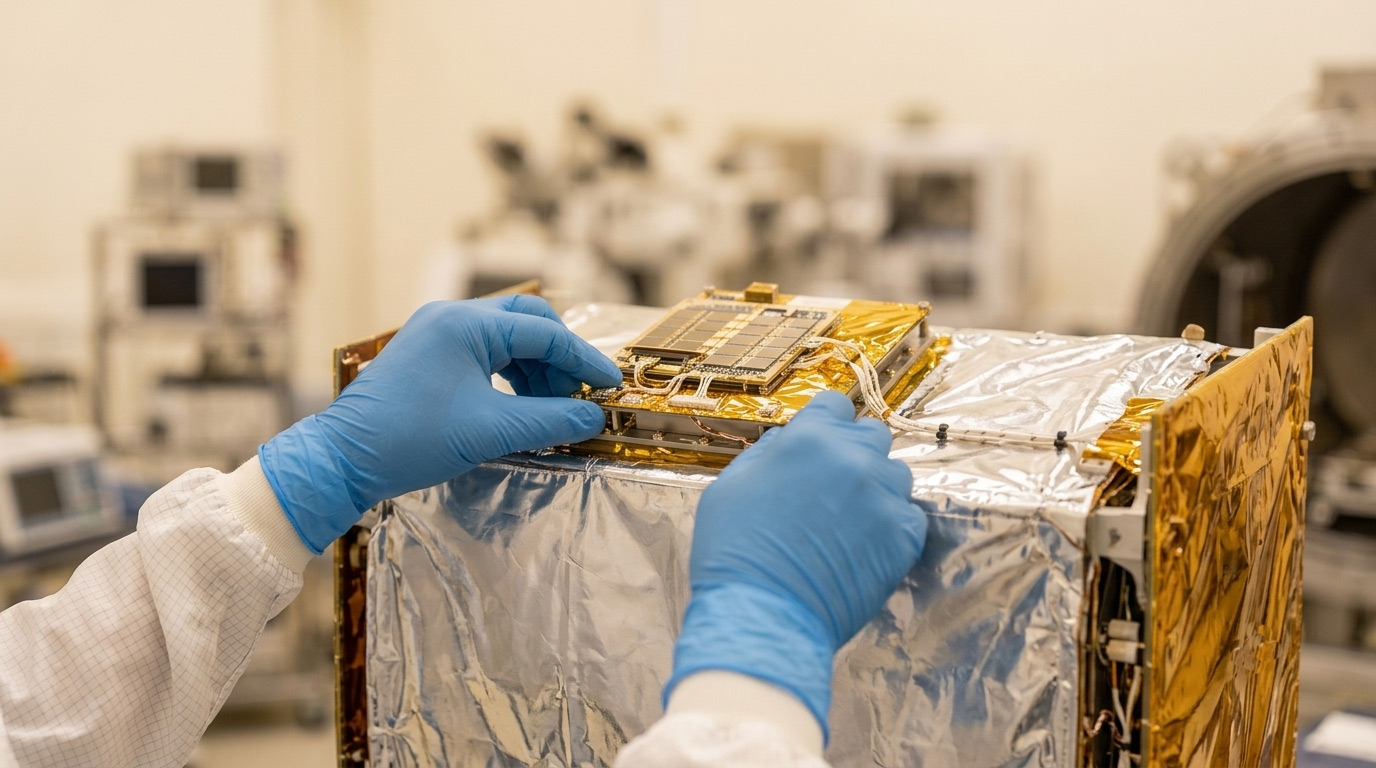
Semiconductor Assembly: From Scheme Evaluation to Cleanroom-Ready Site
A Southeast Asian electronics manufacturer weighed India's incentives against cleanroom, licensing, and workforce variables across multiple states. We listened first, then structured corridor assessment, regulatory mapping, and a phased plan; turning fragmented variables into a sequenced pathway from planning to production
Pharmaceutical Manufacturing: From Regulatory Mapping to a GMP-Ready Facility
A European pharmaceutical company planning an Indian formulation facility faced environmental clearances, GMP alignment, and export-logistics decisions across multiple states. We listened first, then structured a compliance-first site assessment and a regulatory map for clearances and approvals; turning regulatory complexity into a sequenced, confident pathway
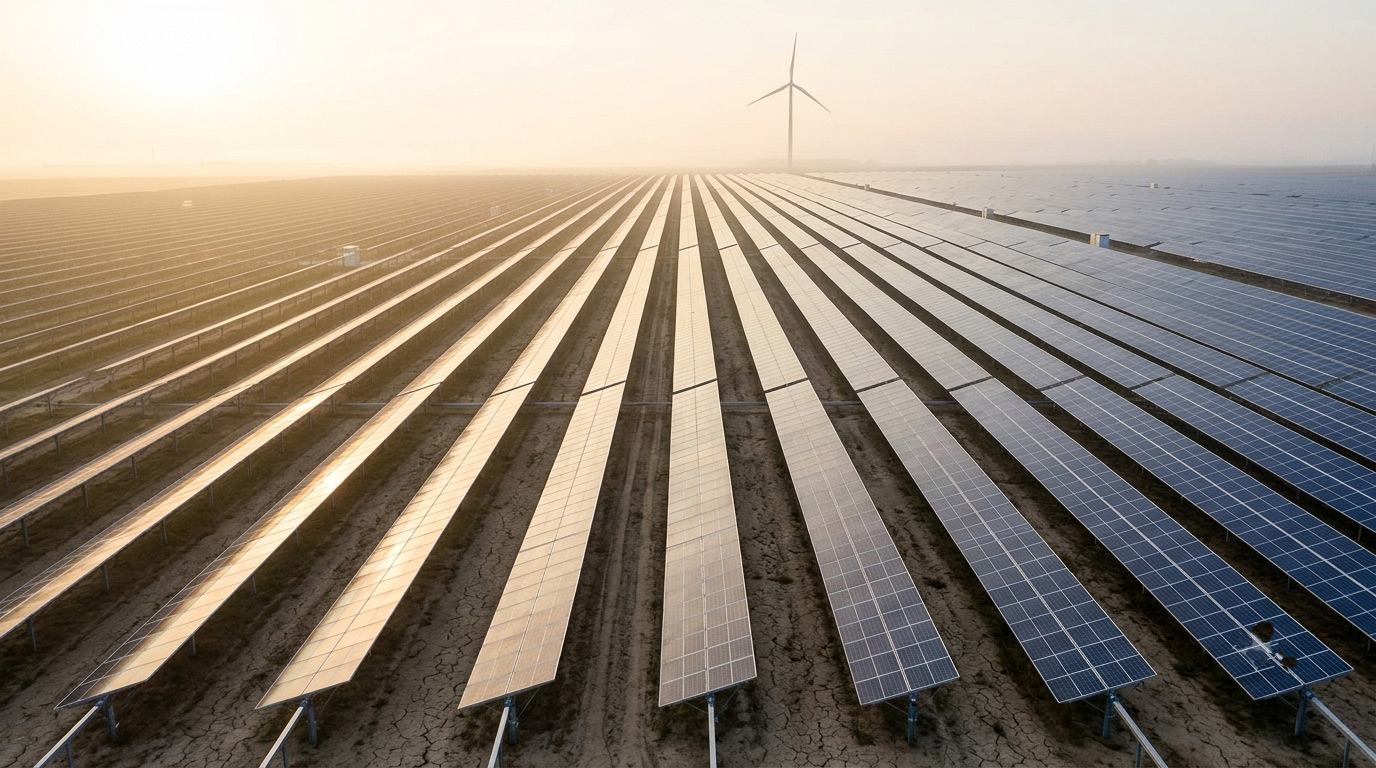
Solar Manufacturing: From Policy Evaluation to Grid-Ready Production
A global solar module manufacturer evaluating India needed corridors with grid evacuation capacity, renewable power access, and incentive alignment under national and state policies. We listened first, then weighted corridor options by grid infrastructure and policy fit, and sequenced approvals to their capacity roadmap; converting policy complexity into a clear investment pathway
Smart Logistics: From Port Proximity to a Multi-Modal Hub
A global logistics provider planning an Indian hub needed land with port, rail, and road connectivity amid varying state warehousing policies. We listened first, then assessed multi-modal corridors, coordinated land and compliance due diligence, and phased the build-out; positioning the hub where India's trade flows grow fastest
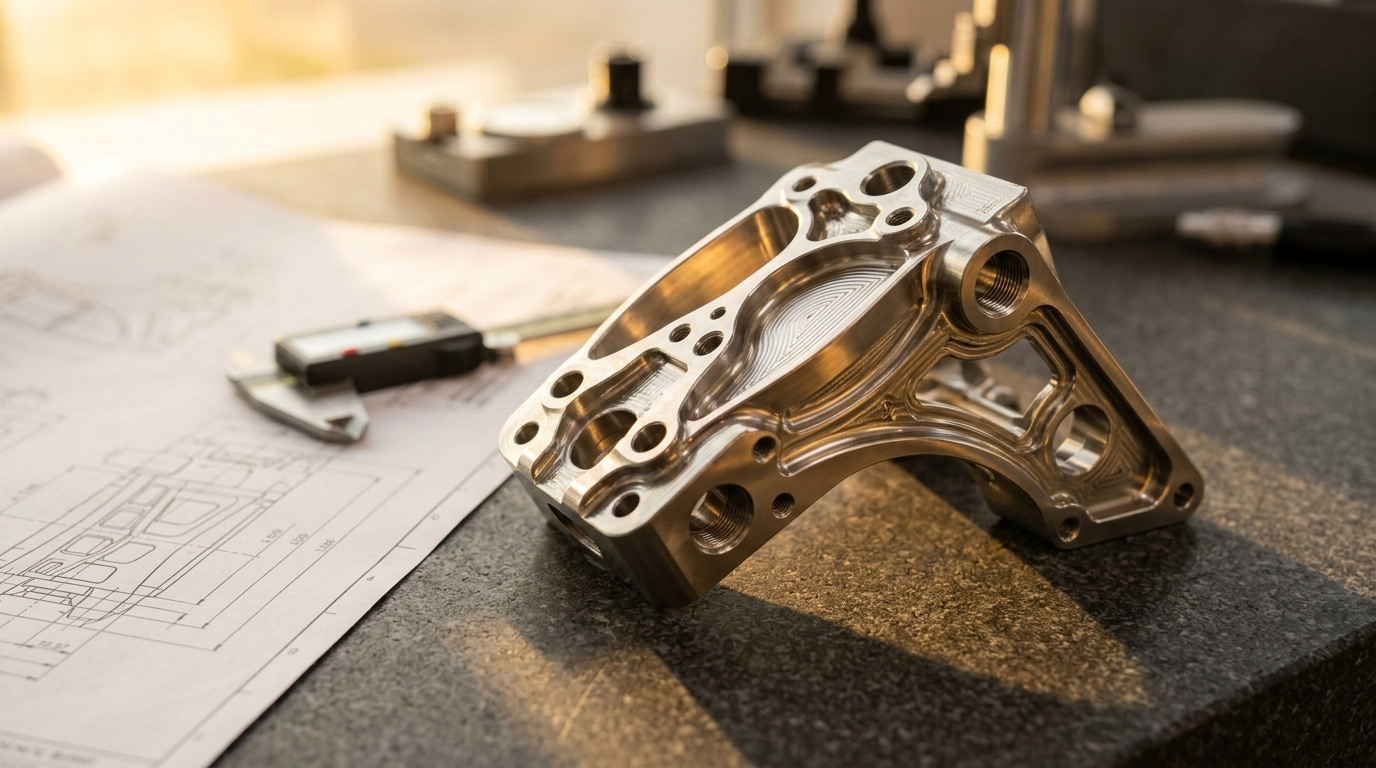
Defence Manufacturing: From FDI Mapping to Certified Production
A European defence components manufacturer navigating India's FDI routes, offset obligations, and security clearances needed a cluster with certified suppliers and precision talent. We listened first, then mapped the FDI and offset pathway, assessed defence clusters, and sequenced clearances; building an enduring partnership in a sector where trust is everything
Briefings from the field: each article anchored, each one an invitation to converse
Space & Technology
From Launchpad to Lunar Soil: What India's Space Story Tells the World
3 Min Briefing • Achievement
When the moon mission Chandrayaan-3 touched down near the lunar south pole, India became the first nation to reach that region; a triumph of patience, precision, and frugal engineering. The same ecosystem now opens to manufacturing: launch-vehicle supply chains, satellite electronics, defence-grade materials, and a workforce trained to global standards. For the global enterprise, the signal is simple: India builds the future, and it invites partners to build alongside
EV Manufacturing: From Site Evaluation to a Localised Production Base
4 Min Briefing • Representative Engagement
An East Asian electric vehicle manufacturer evaluating India needed a corridor with supplier depth, export-capable ports, renewable power, and EV-policy alignment. We structured corridor assessment, policy mapping, and land-and-power due diligence into a phased pathway; from CKD assembly toward deeper localisation. The full case study is under finalisation
Semiconductor Assembly: From Scheme Evaluation to Cleanroom-Ready Site
4 Min Briefing • Representative Engagement
A Southeast Asian electronics manufacturer weighed India's incentives against cleanroom, licensing, and workforce variables across multiple states. A sequenced pathway (corridor assessment, regulatory mapping, and a phased plan) carried the project from scheme evaluation to a cleanroom-ready site. The full case study is under finalisation
Pharmaceutical Manufacturing: From Regulatory Mapping to a GMP-Ready Facility
4 Min Briefing • Representative Engagement
A European pharmaceutical company faced environmental clearances, GMP alignment, and export-logistics decisions across multiple states. A compliance-first site assessment and a clear regulatory map turned complexity into a sequenced pathway to a GMP-ready facility. The full case study is under finalisation
Solar Manufacturing: From Policy Evaluation to Grid-Ready Production
4 Min Briefing • Representative Engagement
A global solar module manufacturer needed corridors with grid evacuation capacity and incentive alignment. Corridor options were weighted by grid infrastructure and policy fit, and approvals sequenced to their capacity roadmap; from policy evaluation to grid-ready production. The full case study is under finalisation
Smart Logistics: From Port Proximity to a Multi-Modal Hub
4 Min Briefing • Representative Engagement
A global logistics provider needed land with port, rail, and road connectivity amid varying state warehousing policies. Multi-modal corridor assessment and a phased build-out positioned the hub where India's trade flows grow fastest. The full case study is under finalisation
Defence Manufacturing: From FDI Mapping to Certified Production
4 Min Briefing • Representative Engagement
A European defence components manufacturer navigated FDI routes, offset obligations, and security clearances. We mapped the pathway, assessed certified clusters, and sequenced clearances; from FDI mapping to certified production. The full case study is under finalisation
The Colour of Partnership: What India's Festivals Teach Global Teams
3 Min Briefing • Culture
From Holi's colour to Garba's circle, India's festivals are not interruptions to work; they are the trust that makes work endure. Global teams that calendar the festival season build loyalty that outlasts any incentive; a brief guide to the festivals your people will love
From Himalaya to Coastline: The Quality of Life Behind the Investment Decision
3 Min Briefing • Travel
Ski slopes at Gulmarg, sailing off the southern coast, tea trails in the north-east; the expanse is India's quiet argument in every boardroom conversation. Because an assignment your family enjoys is an assignment your enterprise retains.
Coastal India: The Long Coastline and the Longer Welcome
3 Min Briefing • Travel
Seven thousand five hundred kilometres of coastline gives India more than ports; it gives a rhythm of life that assignments remember: morning light on the Kerala backwaters, fishing fleets returning to Konkan harbours, sea wind along the promenades of Kochi and Puducherry. For the enterprise, the coast is also infrastructure: major ports, shipyards, and export corridors that carry production to the world. And for the family that accompanies the assignment, it is weekend certainty; sailing, seafood, and slow evenings by the sea. A posting on the Indian coast is a posting your people extend, not endure.
Choosing Your Corridor: The Geography of Advantage
3 Min Briefing • Thematic Intelligence
India's industrial corridors are not lines on a map; they are pre-built arguments for your supply chain; port, rail, power, and policy aligned along a single spine. One corridor favours scale and logistics; another favours electronics and engineering; another favours resource-linked manufacturing. The question is never which corridor is best. It is which corridor is best for your product, your suppliers, and your export lanes; and we answer it with evidence before you answer it with commitment.
Compliance Without Anxiety: Reading India's Regulatory Map
3 Min Briefing • Thematic Intelligence
India's regulatory landscape is often feared before it is read. In truth, most approvals follow a published sequence with defined timelines; the complexity lies in knowing the sequence, the authority, and the order. We convert the map into a checklist (what applies, when it applies, and who signs) so that compliance becomes a calendar, not a gamble.
India adds one of the world's largest working-age populations each year, yet the dividend is not automatic; it is engineered. The right state, the right training partners, and the right wage benchmarks turn availability into capability. We help you locate not merely labour, but skill that stays: the institutes, universities, and apprenticeship pipelines within commuting distance of your gate.
Infrastructure That Carries: Ports, Power, and the Last Mile
3 Min Briefing • Thematic Intelligence
A factory is only as strong as the road out of its gate. India's infrastructure story is now one of capacity added at speed; ports decongested, freight corridors electrified, power firmed by renewables. We test the last mile for you: substation capacity, road loading, port turnaround; the unglamorous numbers that decide the glamorous projections.
Green by Design: Sustainability as Competitive Edge
3 Min Briefing • Thematic Intelligence
In India, sustainability is no longer a compliance chapter; it is a cost advantage. One of the world's largest renewable programmes has made green power procureable at scale; and export markets now reward it. We help you site where solar parks meet grid stability, and where your ESG report writes itself.
Indo-Pacific Hub • The Reading Room — Full Briefing
Case Study • Automotive & EV
Corridor Selection to Production Launch in 14 Months
A European Tier-1 supplier of electric powertrain components needed a single integrated Indian base to serve domestic OEMs and export markets, and a board deadline of eighteen months. This is how launch arrived in fourteen.
By The Indo-Pacific Hub Strategy Desk • 4 Min Briefing • Representative Engagement
Inside the assembly hall, a partly assembled vehicle waits on the line; the mandate: one integrated base serving domestic OEMs and export markets across ASEAN and Europe.
When a European Tier-1 automotive supplier, listed on a major EU exchange and specialised in electric powertrain components and battery-management systems, approached us, the mandate was clear: establish a single, integrated manufacturing base in India serving both domestic OEM demand and export markets across ASEAN and Europe. Anchor orders from two global OEMs were already secured; the India footprint was not. The board set an aggressive clock: production launch within eighteen months of the go-or-no-go decision. Internally, the project was framed not as a pilot but as a strategic, long-term investment.
The Challenge
Three hurdles stood between the mandate and the launch. Site selection was the first: multiple states offered attractive incentives, yet power tariffs, land-title regimes, and approval timelines varied widely, and the site needed proximity to an emerging EV cluster, skilled labour, and logistics corridors strong enough for both domestic distribution and export. Regulatory navigation was the second: central FDI rules, state industrial policies, and sector-specific clearances (environment, fire, factory, pollution) interlocked, with uncertainty around EV-specific incentives and local-content expectations that could materially move project economics. Execution risk was the third: from greenfield land acquisition to commissioned production lines, the timeline left no room for a mis-sequenced approval, and global quality and safety standards had to integrate with local contractors, vendors, and authorities without compromising the launch date.
On the commissioning line, a torque wrench meets its powertrain housing; the detail decides: sequence the approvals, and the line starts on time.
Connect: Mapping the Corridors
We began with a structured corridor analysis across three states, evaluating total cost of ownership (land, power, logistics, labour) alongside policy stability and each jurisdiction's track record of approvals. Access to ports (air and sea), rail networks, and key OEM clusters completed the map. The analysis shortlisted two industrial corridors, and confidential discussions with state investment agencies followed, allowing the client to compare real-term incentives, infrastructure readiness, and likely approval timelines before committing to a location.
"The corridor you choose is the supply chain you inherit, and the calendar you will keep."
Build: One Interface, Every Approval
With the location finalised, we orchestrated the entire setup: land acquisition and title diligence with change-of-land-use processed in parallel; structured handholding through environmental and pollution clearances, factory licence, fire NOC, and building-plan approvals; and registration under the relevant EV and manufacturing incentive schemes. Coordination among EPC contractors, utility providers, and logistics partners was aligned to the client's global equipment-delivery schedule. Throughout, we acted as the single interface between the client's global project team and India's regulatory and execution ecosystem, so delays were identified early and resolved proactively, not discovered late.
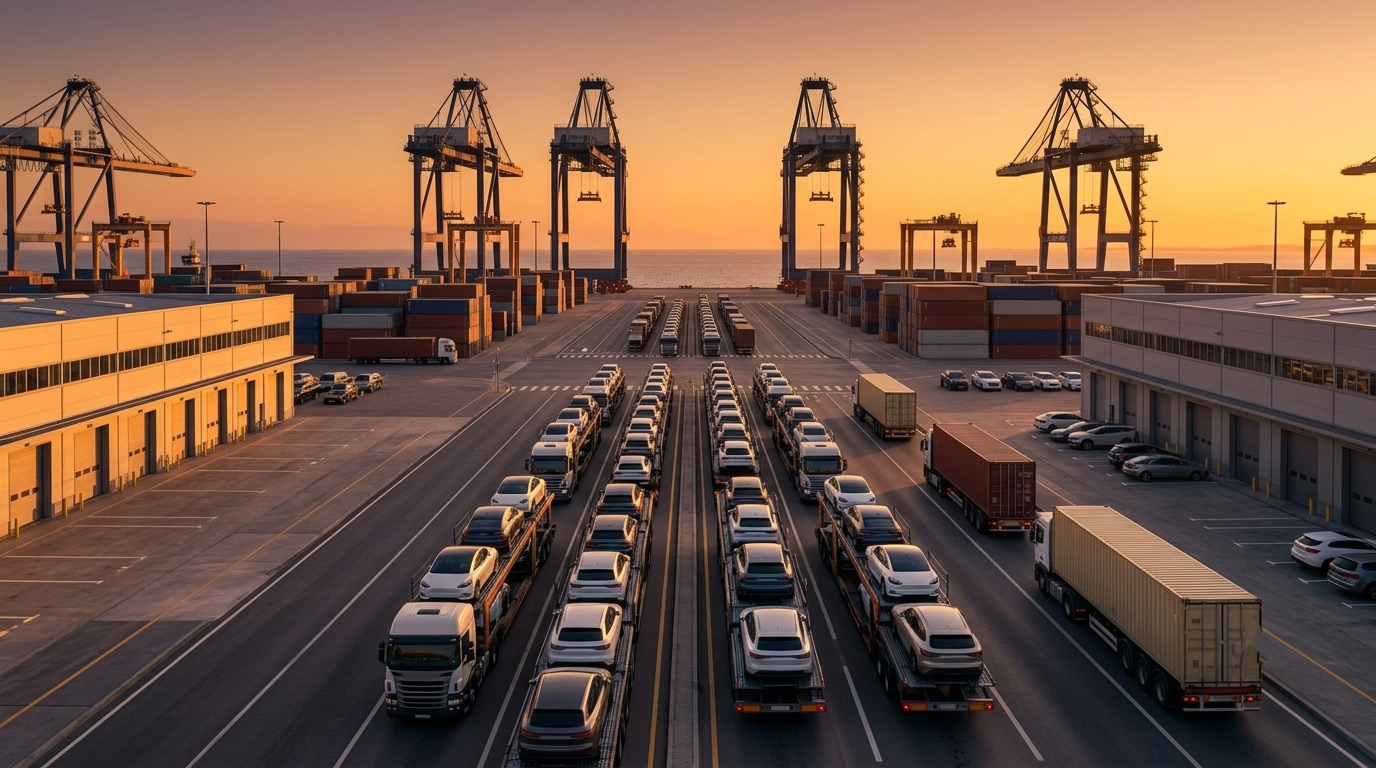
Across the export yard, car-carriers climb toward the gantry cranes; scale follows certainty: the facility ships to EU and North American OEM standards.
Grow: Commissioning and Scale-Up Readiness
In the final phase we supported phased commissioning of pilot and full-scale production lines, built recruitment and training pipelines with local technical institutes, and introduced the client to potential local suppliers to raise indigenous content over time. The plant arrived not merely operational but positioned for rapid scale-up and deeper integration into the client's global supply chain.
The Outcome
Production launch came fourteen months from corridor selection to first-article approval, four months inside the board's benchmark. Capital expenditure landed approximately twelve percent below the client's initial benchmark, driven by informed site choice and incentive structuring. The facility stands export-ready, compliant with EU and North American OEM standards, and the strategic credibility earned with the board has already enabled follow-on investment in India for additional product lines. For this client, India moved from "potential market" to core node in their global EV manufacturing network.
What This Means for Your Enterprise
An eighteen-month board deadline is not a risk to fear in India; it is a sequence to respect. The variables that decide the clock (title clarity, power readiness, approval order, contractor alignment) are all knowable before commitment. When they are known, fourteen months is not luck; it is discipline. If your board is setting a similar clock, the question to answer first is not "can India be fast?" but "which corridor, sequenced how?" That question is answerable, with evidence, before you commit.
Indo-Pacific Hub • The Reading Room — Full Briefing
Case Study • Electronics
Semiconductor Assembly: From Scheme Evaluation to Cleanroom-Ready Site
A Southeast Asian electronics manufacturer weighed India's incentives against cleanroom, licensing, and workforce variables across four states, and chose a corridor with confidence. This is how the decision was made.
By The Indo-Pacific Hub Strategy Desk • 4 Min Briefing • Representative Engagement
Within the assembly hall, cleanroom bays stand ready for the first wafer; cleanroom discipline begins long before, in the corridor that carries power, water, and people to the gate.
When a Southeast Asian electronics manufacturer first turned toward India, the question was not whether the country could assemble semiconductors; it was whether a single site could satisfy cleanroom discipline, licensing timelines, and a workforce capable of holding sub-micron tolerances. The board mandated a decision within two quarters, and the evaluation began across four states.
The Challenge
Semiconductor assembly is unforgiving. It asks for uninterrupted power, ultra-pure water, vibration-free floors, and a supply chain measured in kilometres rather than continents. Each state offered incentives; few could evidence the ecosystem. The client needed more than a policy; it needed proof of execution: substation capacity, water infrastructure, logistics lanes to port, and a pipeline of process engineers.
Licensing added a second layer. Central scheme registration, state industrial approvals, environmental clearances, and factory licensing had to be sequenced so that no single permission became the critical path. And workforce completed the triangle: operator discipline and engineer retention matter in assembly more than anywhere else, so the client asked for evidence of training infrastructure within commuting distance (institutes, labs, apprenticeship pipelines) not promises of abundant labour.
On the inspection bench, gloved hands steady a wafer; the detail decides: sub-micron tolerances demand vibration-free floors and ultra-pure water.
Connect: Mapping the Ecosystem
We began by listening: to the client's process engineers, to their equipment vendors, to their export schedule. Then we mapped four corridors against twelve weighted criteria: power quality and backup, ultra-pure water feasibility, seismic and flood history, port turnaround, and the density of electronics suppliers within a hundred kilometres. Renewable power options were weighed alongside grid stability, since the client's export customers audit carbon as strictly as they audit yield.
Confidential discussions with two state investment agencies followed, converting brochure incentives into written commitments: land with title clarity, substation augmentation timelines, and skill-mission support for operator training.
"In semiconductor manufacturing, the site is the process. Choose the corridor, and you have chosen the yield."
Build: Sequencing the Approvals
With the corridor chosen, we orchestrated the setup: land diligence and change-of-use in parallel; environmental and pollution clearances in a single coordinated filing; factory licence, fire NOC, and building-plan approvals tracked on one shared calendar with the client's global team. Equipment-delivery windows were aligned with utility readiness, so that tool-move-in met a live substation rather than a promise.
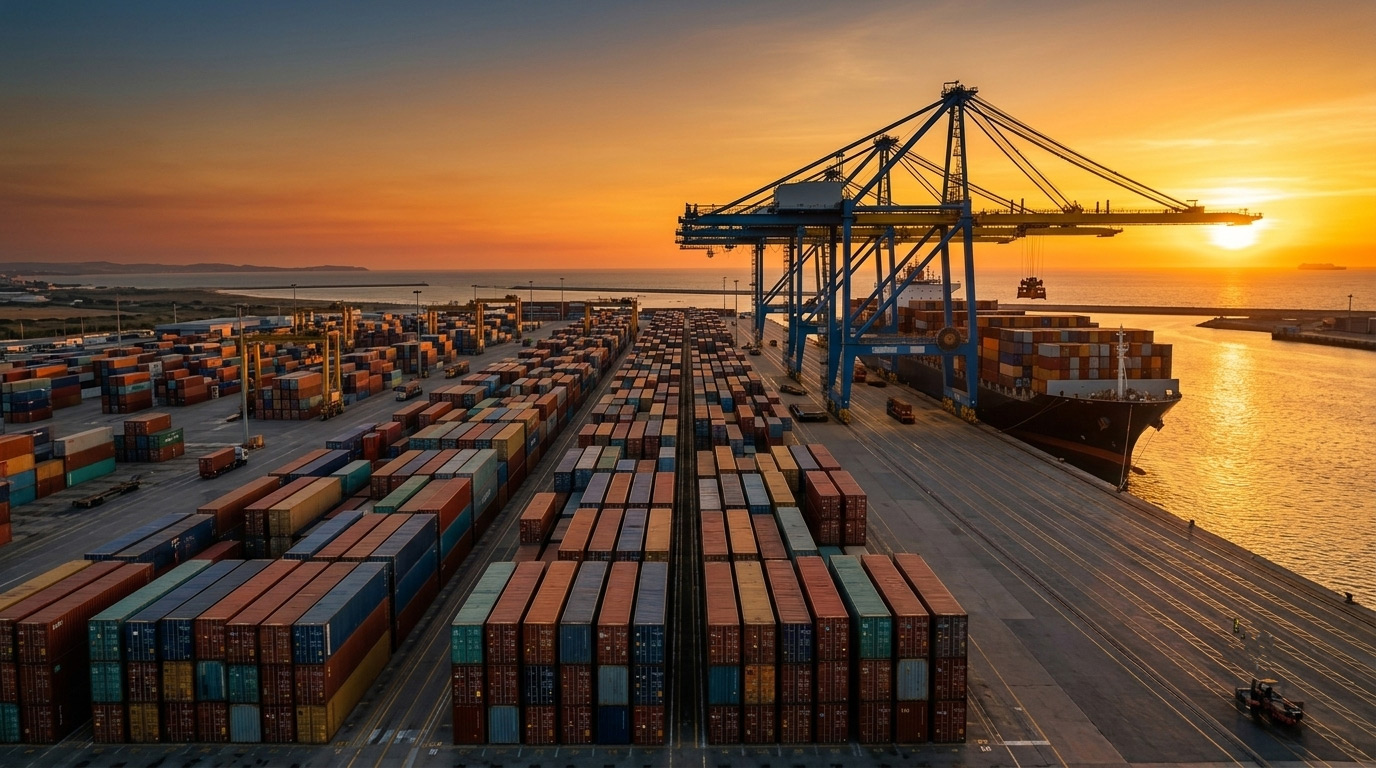
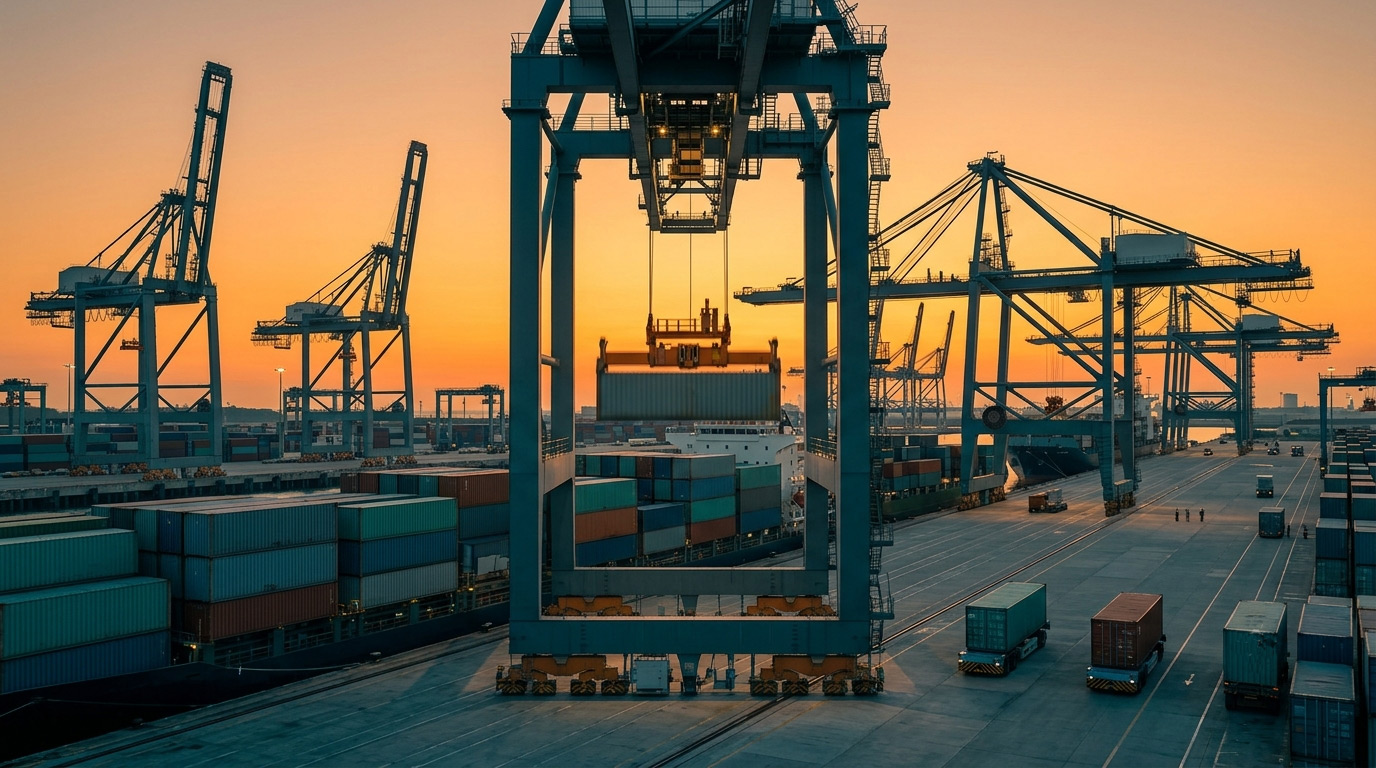
On the export quay, containers climb toward the gantry crane; scale follows certainty: export lanes carry the chosen corridor's output to the world.
Grow: Cleanroom-Ready, Scale-Ready
Commissioning support followed: cleanroom certification protocols, recruitment pipelines with local technical institutes, and introductions to precision component suppliers. The outcome arrived inside the board's window: a cleanroom-ready site, capex held within benchmark through incentive structuring, and a recruitment pipeline signed with two technical institutes before tool-move-in. The client's second line is already in discussion.
What This Means for Your Enterprise
India's semiconductor moment is real, but it rewards preparation: the incentives are public, the differentiators are not. Power, water, people, and permissions decide the yield long before the first wafer. If your board is weighing India for electronics assembly, the first question is not "which scheme?" but "which ecosystem?" That question is answerable, with evidence, before you commit.
Indo-Pacific Hub • The Reading Room — Full Briefing
Case Study • Pharma & Biotech
Pharmaceutical Manufacturing: From Regulatory Mapping to a GMP-Ready Facility
A European pharmaceutical company planning an Indian formulation facility faced environmental clearances, GMP alignment, and export-logistics decisions across multiple states. This is how complexity became a sequenced, confident pathway.
By The Indo-Pacific Hub Strategy Desk • 4 Min Briefing • Representative Engagement
Within the formulation hall, stainless lines stand ready for the first batch; the ambition: an export-ready plant meeting EU GMP expectations from its first inspection.
When a European pharmaceutical company turned to India for a new formulation facility, the ambition was clear: a cost-competitive, export-ready plant capable of meeting EU GMP expectations from its first inspection. The mandate named India not as an experiment but as a cornerstone of future supply. What remained unclear was the path: environmental clearances, state industrial approvals, GMP alignment, and export-logistics decisions, each varying across the states under consideration, each capable of adding quarters if mis-sequenced. The board asked for a site decision within two quarters and an inspection-ready facility within thirty months.
The Challenge
Pharmaceutical manufacturing is a compliance-first industry: the facility is the dossier. Environmental clearance and pollution-board consent, factory licence, fire NOC, and building-plan approvals had to be sequenced alongside the quality architecture (water systems, HVAC qualification, validation master plans) that EU inspectors would one day audit. And because formulation serves regulated markets, the timeline risk was not merely commercial: every quarter of delay shifted a launch window that competitors would inherit. Export logistics added a third dimension: port connectivity, cold-chain availability, and air-freight capacity for time-sensitive markets. Across the shortlisted states, incentives looked similar on paper; the differentiators hid in execution: clearance timelines, utility reliability, and the depth of local quality talent.
There was also a human variable. A GMP facility lives on its quality culture: operators who document as they work, engineers who qualify before they celebrate. The client needed evidence of pharma-grade talent within commuting distance, not merely labour availability, but a pipeline of trained quality professionals.
In ordered rows upon the quality bench, amber glass vials await their audit; the facility is the dossier: every clearance sequenced today is every audit answered tomorrow.
Connect: A Compliance-First Site Assessment
We listened first: to the client's regulatory-affairs lead, to their EU quality head, to their supply-chain planners. Then we assessed candidate sites against a compliance-first matrix: environmental-clearance history, pollution-board responsiveness, utility reliability in power, water, and effluent treatment, port and air-freight connectivity, and the density of GMP-experienced professionals within commuting distance. Renewable-power options were weighed too, as European customers increasingly audit carbon alongside compliance. Confidential discussions with two state agencies converted incentive brochures into written commitments: effluent-treatment capacity, utility augmentation, and single-window timelines for industrial approvals.
"In pharmaceuticals, the facility is the dossier. Build the compliance sequence well, and the approvals follow the science."
Build: The Regulatory Map
With the site chosen, we structured the regulatory map: environmental clearance and pollution-board consent in a single coordinated filing; factory licence, fire NOC, and building-plan approvals tracked on one shared calendar; and registration under state pharmaceutical incentives aligned to the capex schedule. Crucially, the quality build ran in parallel with the statutory build, water-system and HVAC qualification planned before construction completion, so that validation began when the walls closed, not months after.
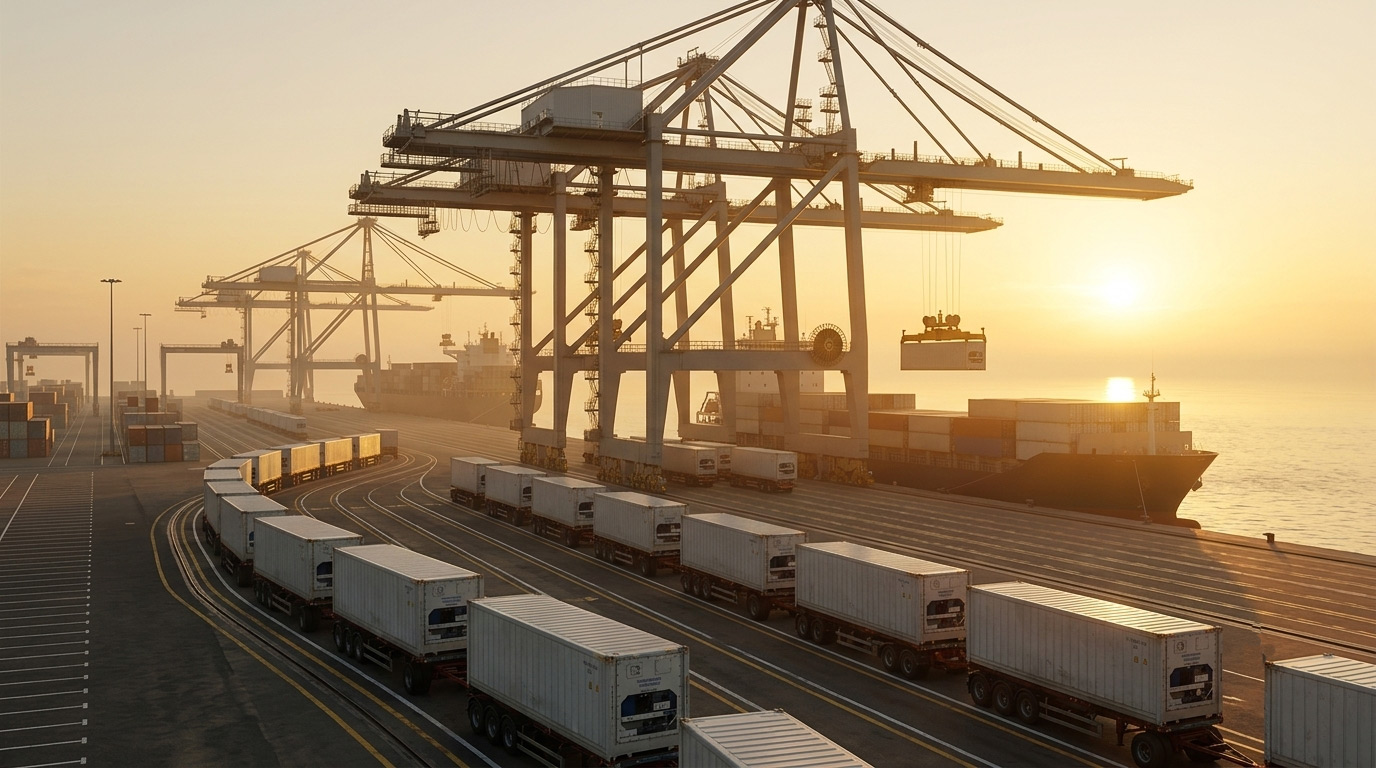
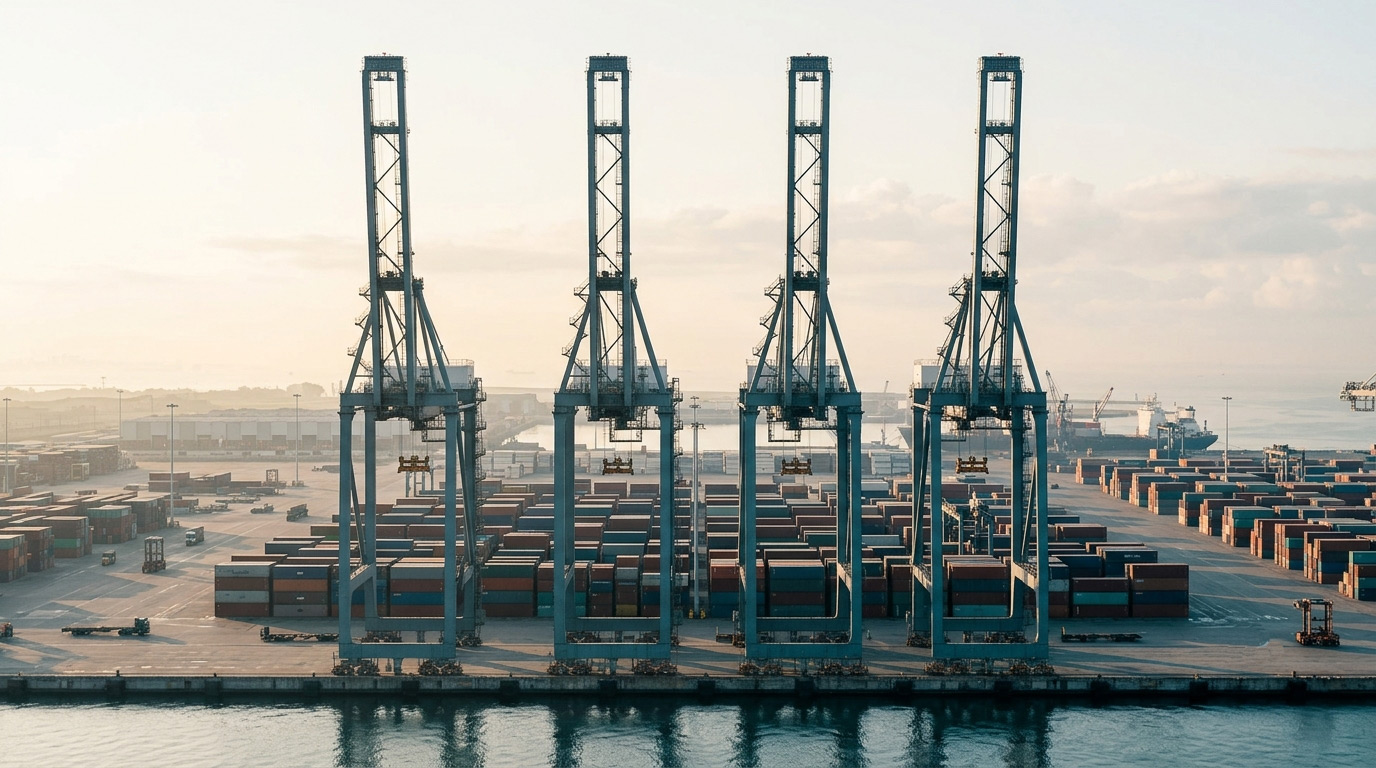
At the port terminal, reefer containers queue for the gantries; scale follows certainty: the export-ready facility ships to regulated markets on schedule.
Grow: Inspection-Ready
As construction closed, we supported the readiness phase: validation master-plan execution, mock inspections modelled on EU expectations, and recruitment of quality leadership from established Indian pharma clusters. Introductions to local excipient and packaging suppliers followed, raising indigenous content without qualifying risk. The facility met its thirty-month window: inspection-ready, export-connected, and staffed by a quality team that documents as it works.
What This Means for Your Enterprise
India remains the world's pharmacy for a reason: depth of talent, cost discipline, and a regulator accustomed to global scrutiny. But the advantage accrues to those who sequence: clearances before construction, qualification before celebration. If your board weighs India for formulation or biologics, the first question is not "which incentive?" but "which site can pass the inspection you will one day invite?" Begin with the inspection in mind; the corridor, the utilities, and the talent will answer in order. That question is answerable, with evidence, before you commit.
Indo-Pacific Hub • The Reading Room — Full Briefing
Case Study • Renewable Energy
Solar Manufacturing: From Policy Evaluation to Grid-Ready Production
A global solar module manufacturer evaluating India needed corridors with grid evacuation capacity, renewable power access, and incentive alignment under national and state policies. This is how policy complexity became a clear investment pathway.
By The Indo-Pacific Hub Strategy Desk • 4 Min Briefing • Representative Engagement
Within the module factory, the layup line sets its first panel; the mandate: build where the sun is abundant, the market is growing, and the grid is ready.
When a global solar module manufacturer turned toward India, the logic was elegant: build modules where the sun is abundant, the market is growing, and exports can reach three continents. The mandate named India not as an option but as the anchor of future supply. The reality was more demanding. Module manufacturing is power-hungry and land-hungry; it asks for grid evacuation capacity that can absorb production, renewable power access that satisfies export customers' carbon audits, and incentives that align with a capacity roadmap doubling every few years. The board asked for a corridor decision within two quarters.
The Challenge
Three variables decided the economics. First, the grid: a module plant's output is only as reliable as the substation that feeds it and the evacuation line that carries its surplus; several candidate regions offered land but not firm power architecture. Second, policy fit: national production-linked incentives, state solar policies, and power-purchase frameworks each carried different eligibility clocks and documentation burdens; misreading one could shift a quarter. Third, the export equation: European and North American customers increasingly require renewable-powered production and traceable supply chains, so the site's energy mix became a commercial instrument, not merely a utility contract. Water for process and cleaning added a fourth, quieter constraint in water-stressed regions.
There was also a sequencing risk familiar to every manufacturer: approvals that arrive out of order become delays that compound. Land conversion before environmental clearance, or grid connection after construction, each adds months that no incentive can repay.
On the test bench, a photovoltaic cell shows its busbars to the probe; the detail decides: module economics live in microns, minutes, and megawatts.
Connect: Weighting the Corridors
We listened first: to the client's process engineers, to their energy-procurement lead, to their export planners. Then we weighted corridor options against the variables that decide a module plant: substation capacity and evacuation headroom, renewable power availability and open-access rules, land title clarity and conversion timelines, port connectivity for export lanes, and the alignment of national and state incentives with the client's capacity roadmap. Seismic and flood history entered the matrix too, because a module plant's insurance is priced by its geography. Confidential discussions with two state agencies converted policy brochures into written commitments: evacuation infrastructure timelines, power tariff certainty, and single-window clearance calendars.
"In solar manufacturing, the corridor is the circuit: land, power, and policy must conduct together."
Build: Sequencing to the Capacity Roadmap
With the corridor chosen, we sequenced approvals to the capacity roadmap: land diligence and conversion in parallel with environmental clearance; grid-connection approvals and open-access permissions tracked on one shared calendar; and incentive registrations aligned to each production phase, so that every expansion tranche qualified as it commissioned. Utility coordination ran continuously, substation augmentation scheduled against equipment delivery, so that energisation met installation rather than waiting for it.
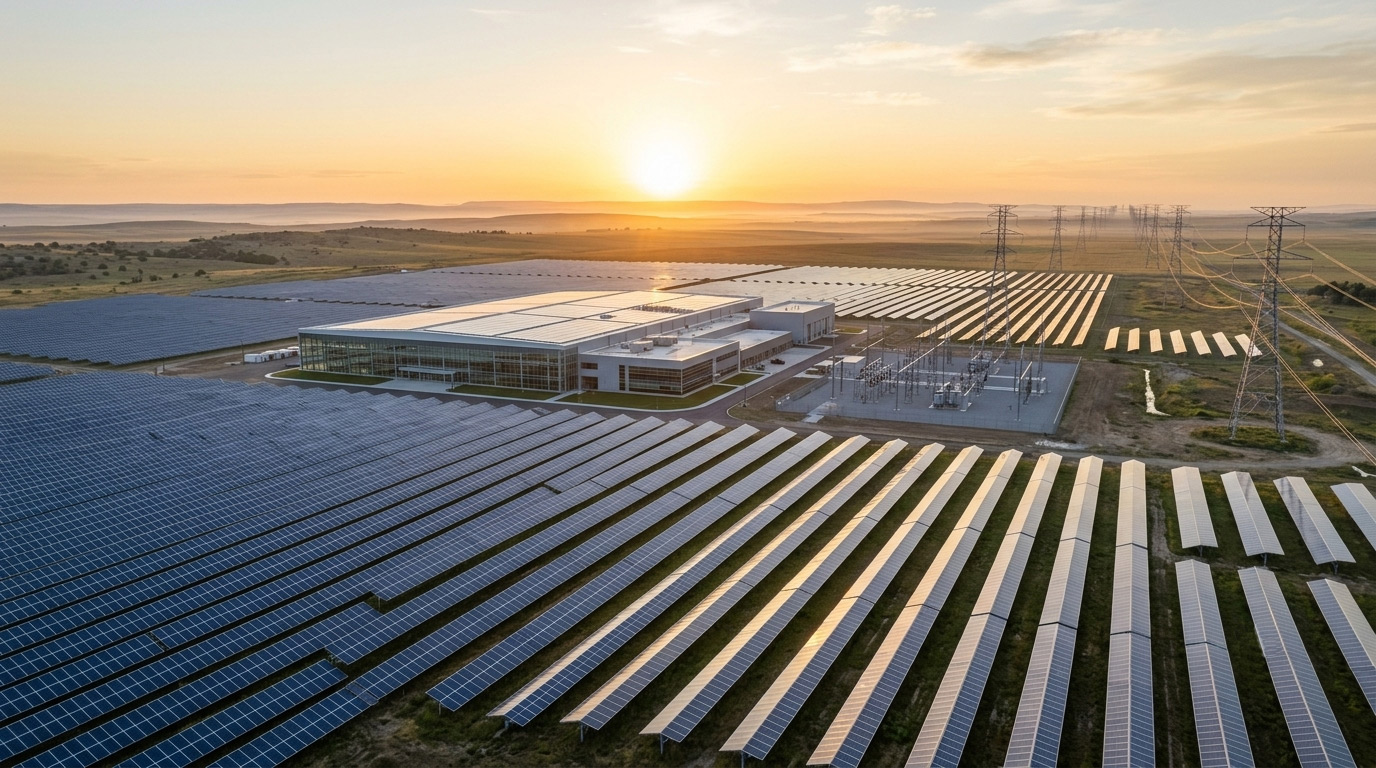
Beside the new plant, module rows stand in ordered ranks toward the horizon; scale follows certainty: grid-ready production serves three continents from one corridor.
Grow: Grid-Ready and Export-Ready
Commissioning support followed: power-quality validation, renewable open-access execution, and introductions to local glass, frame, and junction-box suppliers to raise indigenous content. Recruitment pipelines with local technical institutes secured operators trained for cleanroom discipline. The first line reached grid-ready production inside the board's window, with an energy mix its export customers could certify, and the second tranche is already sequenced.
What This Means for Your Enterprise
India's solar ambition is among the world's largest, and its manufacturing invitation is genuine: incentives, market growth, and export position aligned in one policy frame. But the advantage accrues to those who read the grid before the gloss: substation headroom, evacuation lines, and open-access rules decide economics long before incentives do. If your board weighs India for modules, cells, or components, the first question is not "which subsidy?" but "which corridor can carry your megawatts?" Begin with the substation; the subsidies will follow in order. That question is answerable, with evidence, before you commit.
Indo-Pacific Hub • The Reading Room — Full Briefing
Case Study • Logistics
Smart Logistics: From Port Proximity to a Multi-Modal Hub
A global logistics provider planning an Indian hub needed land with port, rail, and road connectivity amid varying state warehousing policies. This is how the hub came to stand where India's trade flows grow fastest.
By The Indo-Pacific Hub Strategy Desk • 4 Min Briefing • Representative Engagement
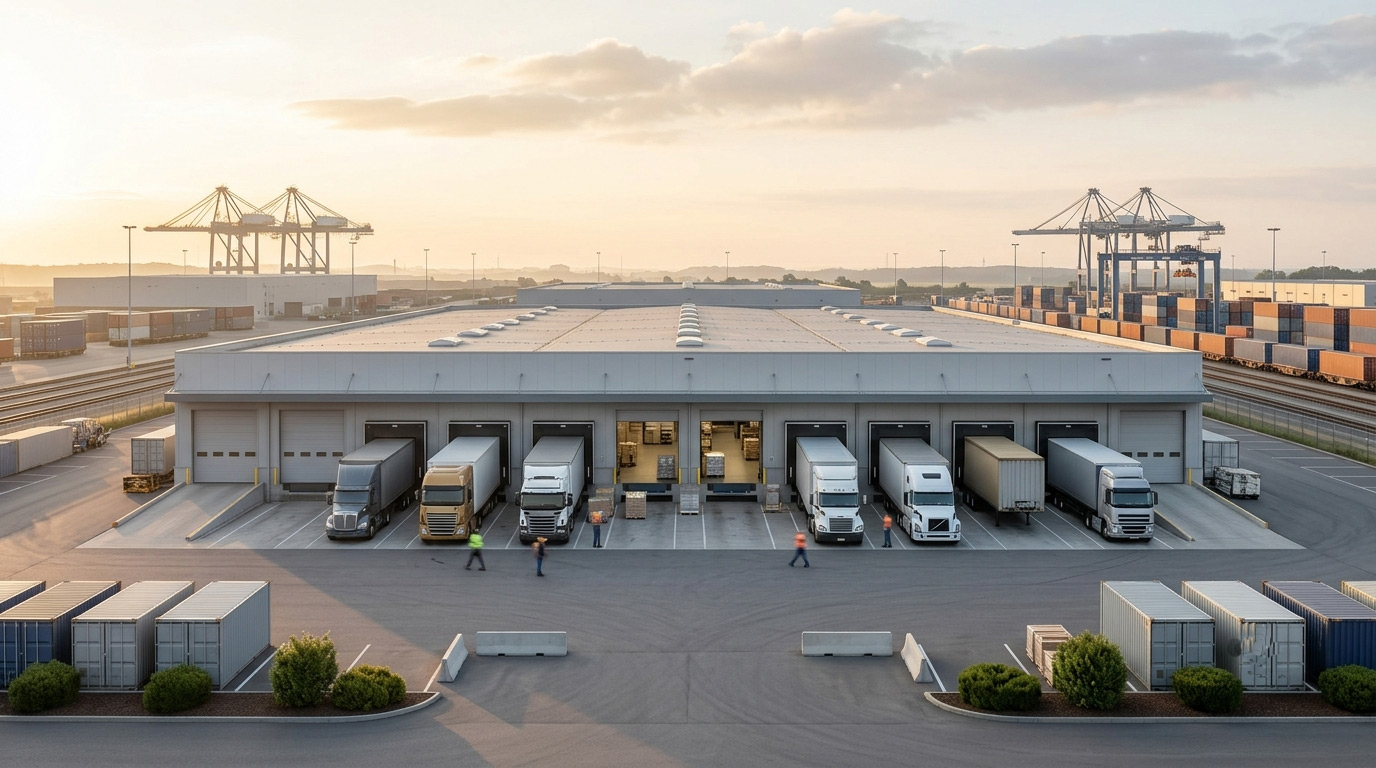
Across the multi-modal park, cross-dock bays open their doors to the first trucks; the mandate: stand where India's trade flows will grow, not merely where they stand.
When a global logistics provider turned to India, the mandate was geographic before it was financial: position a distribution hub where the country's trade flows would grow over the next decade, not where they merely stand today. The mandate named India not as a stop but as the hinge of regional supply. The hub had to serve importers and exporters across three corridors, handle containerised and e-commerce cargo alike, and connect seamlessly to a major port, a rail freight terminal, and two national highways. The board approved the capital; the geography remained the question.
The Challenge
Warehousing in India is a state-subject mosaic: land-title regimes, conversion procedures, warehousing policies, and labour rules vary across borders that cargo crosses daily. Port proximity alone proved insufficient: congestion at the gates could erase the advantage of nearness. Rail connectivity existed on maps but not in schedules: siding capacity and rake availability decided whether rail was an asset or an ornament. And e-commerce clients demanded same-day reach to consumption clusters, pulling the site selection toward highways and urban peripheries even as export clients pulled it toward the coast. Monsoon resilience entered the matrix too, because a flooded approach road is a closed warehouse.
There was also a compliance layer specific to logistics: customs-bonded warehouse licensing, container freight station approvals, and fire and structural certifications that differ by cargo class. Mis-sequencing any of these could delay operations by quarters.
On the quay, gloved hands lock a container seal beneath the gantry's reach; the detail decides: a hub's value is measured in minutes saved at every gate, siding, and checkpoint.
Connect: Assessing the Multi-Modal Corridors
We listened first: to the client's network planners, to their port agents, to their e-commerce customers' service heads. Then we assessed multi-modal corridors against the variables that decide a hub: port turnaround and gate automation, rail siding capacity and rake schedules, highway access and trucking lanes to consumption clusters, land title clarity and conversion timelines, and the warehousing policies of each candidate state. Labour availability for round-the-clock operations and the depth of customs-brokerage talent completed the picture. Confidential discussions with two state agencies and a port authority converted brochures into commitments: gate-automation timelines, siding augmentation, and single-window clearance calendars for bonded licensing.
"A hub is not a building; it is a position in the flow. Choose the corridor where the flow accelerates, and the building earns its keep."
Build: Land, Compliance, and the Phased Build-Out
With the corridor chosen, we coordinated land and compliance due diligence in parallel: title verification and conversion alongside environmental and fire clearances; customs-bonded licensing sequenced to construction completion so that certification met commissioning. Utility readiness (power for automation, water for fire systems) was verified before foundation work began. The build-out was phased deliberately: first cross-dock capacity for e-commerce, then bonded warehousing for exporters, then rail-side stacking as siding augmentation landed, so that revenue began before the final phase closed.
Beneath the gantry cranes, containers glide toward the stacked rows; scale follows certainty: the hub now moves cargo for three corridors from one address.
Grow: Where the Flows Grow Fastest
Operational support followed: recruitment of operations and customs teams, introductions to trucking and last-mile partners, and alignment with the port's digital gate systems. A shared training calendar with two local institutes now feeds the hub's second and third shifts. Within eighteen months the hub stood where India's trade flows grow fastest, serving importers, exporters, and e-commerce from one address, with room reserved for the third phase the traffic already justifies.
What This Means for Your Enterprise
India's logistics landscape is transforming: dedicated freight corridors, port automation, and warehousing reform are rewriting the map faster than most boards refresh it. The advantage accrues to those who read flows rather than addresses: gate turnaround, siding capacity, and highway lanes decide a hub's economics long before land price does. If your network plan touches India, the first question is not "where is land cheap?" but "where will the flow be in five years?" Begin with the flow; the land will follow in order. That question is answerable, with evidence, before you commit.
Indo-Pacific Hub • The Reading Room — Full Briefing
Case Study • Aerospace & Defence
Defence Manufacturing: From FDI Mapping to Certified Production
A European defence components manufacturer navigating India's FDI routes, offset obligations, and security clearances needed a cluster with certified suppliers and precision talent. This is how trust was built: clearance by clearance.
By The Indo-Pacific Hub Strategy Desk • 4 Min Briefing • Representative Engagement
Inside the precision hall, five-axis machines stand ready on the line; the mandate: an Indian base serving Indian programmes and export order books alike.
When a European defence components manufacturer turned to India, the opportunity was framed by two forces: India's growing defence indigenisation agenda, and the global search for resilient, certified supply. The mandate named India not as an option but as a pillar of future supply: establish an Indian production base for precision components serving both Indian programmes and export order books. Yet defence manufacturing is the most trust-gated industry on earth: foreign-investment routes, offset obligations, security clearances, and certification regimes each stand between intent and production. The board understood the prize; it needed the pathway.
The Challenge
Three gates decided the journey. First, the investment gate: India's FDI policy for defence permits automatic approval up to a defined threshold and the government route beyond it; the structure chosen at entry would shape every later expansion. Second, the offset gate: Indian procurement contracts often carry offset obligations, and qualifying as an offset supplier demanded documentation rigour from day one. Third, the certification gate: defence customers audit to standards far stricter than commercial aerospace (traceability, controlled documentation, and security-cleared personnel within a certified cluster). Export-control alignment added a fourth gate, since dual-use components carry obligations in both jurisdictions. Location was therefore not a cost decision but a trust decision.
There was also a cluster question: precision defence manufacturing thrives where certified suppliers, testing facilities, and skilled machinists already coexist. Greenfield isolation would double the certification burden.
Upon the leather flight log, an aviator's watch keeps its quiet count; the detail decides: in defence manufacturing, traceability is the product, and discipline is the certificate.
Connect: Mapping FDI Routes and Certified Clusters
We listened first: to the client's counsel, to their quality director, to their offset-obligations ledger. Then we mapped the FDI routes against the ownership structure the board intended: automatic-route headroom, government-route timelines, and the implications for future capex tranches. In parallel we assessed three certified defence clusters: density of AS9100-certified suppliers, proximity to testing and certification bodies, availability of security-clearable talent, and each state's defence-industry policy support. Power quality and vibration-free floors entered the matrix too, because precision machining is measured in microns. Confidential discussions with cluster authorities converted interest into invitations: land within certified parks, access to common test facilities, and single-window calendars for industrial licences.
"In defence manufacturing, trust is the licence. Every clearance earned is a market opened."
Build: Sequencing the Clearances
With the cluster chosen, we sequenced the clearances in the order trust is built: industrial licence and foreign-investment filings first; security clearances for personnel and facility next; then certification readiness (controlled documentation, traceability systems, and quality procedures aligned to defence audit expectations). Land and construction ran in parallel with the paperwork, so that the facility met the certification calendar rather than chasing it. Offset-qualification documentation was prepared alongside, positioning the plant to serve Indian programmes from its first quarter.
On the quality desk, a precision-machined component lies upon its inspection certificate; scale follows certainty: certified parts became an offset contract before the plant's first anniversary.
Grow: Certified Production, Enduring Partnership
Commissioning support followed: recruitment of clearable precision talent from local institutes, introductions to certified cluster suppliers, and alignment with the client's global quality system. A joint training calendar with two industrial-training institutes now feeds the second shift. The plant reached certified production inside the board's window, and its first Indian offset contract was signed before its first anniversary.
What This Means for Your Enterprise
India's defence manufacturing invitation is genuine and growing: indigenisation lists, FDI headroom, and cluster infrastructure aligned in one policy frame. But the sector rewards those who treat compliance as strategy: route structure, offset qualification, and certification sequence decide market access long before capacity does. If your board weighs India for defence or aerospace components, the first question is not "where is the land?" but "where is the trust already certified?" Begin with the cluster; the capacity will follow in order. That question is answerable, with evidence, before you commit.
Indo-Pacific Hub • The Reading Room — Full Briefing
Culture • Festivals of India
The Colour of Partnership: What India's Festivals Teach Global Teams
From Holi's colour to Garba's circle, India's festivals are not interruptions to work; they are the trust that makes work endure. This is the calendar your people will love, and the loyalty it builds.
By The Indo-Pacific Hub Editorial • 4 Min Briefing • Culture
Along the courtyard edge, rows of diyas hold their small flames; the calendar of trust begins with a lamp lit in someone's name.
When a global enterprise first calendars an Indian festival season, it often begins as an accommodation: a holiday list, a shifted deadline, a sweet box in the reception. Then, somewhere between the first Diwali lamp and the second, something quieter happens. The factory floor teaches the boardroom that festivals are not interruptions to work; they are the trust that makes work endure. India celebrates more major festivals than any other nation on earth, and each one is an invitation to belong. No other democracy celebrates so much, so publicly, so together.
The Calendar of Trust
Consider what a festival actually does inside an organisation. Diwali closes the old ledger and opens the new; many businesses begin their financial year with it, and suppliers remember who wished them well. Holi dissolves hierarchy for a morning; colour does not read org charts. Garba gathers thousands into circles where rank cannot be seen and rhythm is shared. Eid and Christmas exchange gifts across faiths; Pongal and Onam honour harvests and the hands that raise them. Onam's boat races and Bihu's dances remind us that India's festivals are regional as well as national: each state keeps its own beloved days, and a plant that honours them honours its own neighbourhood. And Raksha Bandhan's tied threads speak of protection promised, a metaphor any safety officer will smile at. Each festival says to an employee: your story is part of this company's story. Loyalty built in those hours outlasts any incentive paid in others.
Beside the small brass bell, a marigold garland waits at the threshold; the detail decides: belonging is built in hours like these, not in handbooks.
Five Festivals Your People Will Love
For the global team arriving new to India, five festivals offer the gentlest introductions. Diwali, the festival of lights, fills offices and homes with lamps in October or November, the warmest welcome a newcomer can receive. Holi, in March, paints the morning in colour and laughter; bring clothes you are willing to lose. Eid brings its morning prayers and evening feasts, and the discipline of Ramadan earns quiet respect. Ganesh Chaturthi walks a beloved deity through the streets in music and procession. And in autumn, Navratri's nine nights turn parking lots into Garba circles where executives learn the steps alongside operators. Makar Sankranti's kites fill January skies from terrace to terrace, a festival of wind, wager, and sweets. Dussehra's effigies mark the victory of effort over obstacle, a fitting patron for any commissioning schedule.
Two practical notes complete the picture. First, festival dates move with the lunar calendar: plan capacity with them, not around them. There is also a commercial rhythm worth respecting: the weeks before Diwali are India's gifting and purchasing season; production plans that honour it find suppliers at their most motivated, and logistics at its busiest. Second, participation is invitation, never obligation; the colleague who watches is as welcome as the colleague who dances.
"A festival wish, remembered a year later, is loyalty no incentive can buy."
At the factory gate, a rangoli of flower petals welcomes the first shift through; the floor that celebrates together, delivers together.
What This Means for Your Enterprise
Global teams that calendar the festival season discover a compounding return: retention rises, referrals follow, and the enterprise becomes a neighbour rather than a foreigner. The cost is a shifted deadline; the gain is a decade of belonging. If your people plan an India assignment, tell them this: bring curiosity, accept the sweet, learn one step of the dance. The festivals will do the rest, because an assignment your family enjoys is an assignment your enterprise retains, and a team that celebrates together stays together. And when your expatriate manager returns home years from now, it will not be the incentive letter they quote; it will be the morning the floor painted them in colour, and the evening a lamp was lit in their name.
Indo-Pacific Hub • The Reading Room — Full Briefing
Travel • The Expanse
From Himalaya to Coastline: The Quality of Life Behind the Investment Decision
Ski slopes at Gulmarg, sailing off the southern coast, tea trails in the north-east: the expanse is India's quiet argument in every boardroom conversation. This is the quality-of-life case for the assignment your family will love.
By The Indo-Pacific Hub Editorial • 4 Min Briefing • Travel
Above Gulmarg, a Himalayan snow ridge holds the border of the sky; the expanse begins where the incentive brochure ends.
When a board approves an India assignment, it approves more than a factory: it approves a life. The expatriate manager will spend mornings in meetings and evenings, weekends, and school holidays inside the country that hosts them. And here India plays its quietest and strongest card: few nations on earth offer a family so much to love within a single border: snow at Gulmarg in January, sailing off Kochi in February, tea trails in Munnar and Darjeeling, deserts that bloom, islands that glow, and festivals that turn strangers into neighbours. It is the argument that never appears in an incentive brochure, yet decides more assignments than any incentive. The expanse is not scenery; it is retention.
The Quality-of-Life Argument
Human-resource directors know the arithmetic: an assignment that delights the family extends itself; an assignment that bores them ends early, and with it the continuity a young plant depends upon. India's geography answers the boredom risk with variety. Within a three-hour flight of most industrial corridors lie Himalayan trekking, wildlife reserves, heritage cities, coastlines, and hill stations cooled by monsoon. And for the manager themselves, the expanse is recovery: the mind that walks a ridge on Sunday negotiates better on Monday. The manager who spends Saturday sailing or sketching temple architecture returns Monday with the patience that commissioning schedules demand.
On the Kerala backwaters, a houseboat glides between the palm banks; a Saturday that restores a manager is a Monday that delivers for the plant.
A Calendar of Weekends
Consider the year as an assignment in family living. Winter brings snow to Gulmarg and Auli, ski slopes that rival the Alps at a fraction of the altitude cost. Spring opens the heritage circuits of Rajasthan and the temple towns of the south, where stone carries millennia of craft. Monsoon greens the Western Ghats and fills the backwaters of Kerala, where houseboats move at the speed of conversation. Wildlife reserves (tigers at Ranthambore, elephants in Periyar, leopards in the Sahyadris) sit within driving distance of most corridors, offering children lessons no classroom can. Autumn offers festivals in every street (Diwali lamps, Garba circles, Durga's drums) and winter returns to desert camps under skies thick with stars. No weekend needs a passport; the country is the itinerary.
For the accompanying partner and children, the expanse compounds: international schools in every major industrial city, healthcare of global standard, and a culture that receives guests as honour: atithi devo bhava, the guest is god. The spouse who arrives anxious about "the posting" often leaves having hosted friends from three continents on journeys through it.
"Few borders hold so much to love: snow, sea, desert, and festival, all within a weekend's reach."
The Enterprise Reading
What does this mean in boardroom terms? Retention, first: assignments extend, turnover costs fall, and plant leadership stays continuous through the critical early years. Recruitment, second: candidates weigh lifestyle as heavily as salary, and an India offer that names Gulmarg and Kochi alongside the compensation band changes conversations. One European client now includes a "first-four-weekends" map in every India offer letter; its assignment acceptance rate rose visibly the year it began. And reputation, third: enterprises that calendar the expanse into onboarding (a monsoon-weekend guide, a festival calendar, a school shortlist) signal that they manage people, not merely postings.
Off the Kochi coast, a lone sail leans into the wind and holds its line; scale follows certainty: the weekends that keep a leadership team in place through the critical early years.
What This Means for Your Enterprise
When your board weighs an India location, the checklist will carry power, port, and policy, rightly. Add one line beneath them: the life beside the line. Ask what a family will do with the fifty weekends a year that are not production. In India the answer is an itinerary no other manufacturing destination can match: Himalaya to coastline, desert to backwater, festival to festival. Because an assignment your family enjoys is an assignment your enterprise retains, and retention, in the end, is a manufacturing metric like any other.
Indo-Pacific Hub • The Reading Room — Full Briefing
Travel • Coastal India
Coastal India: The Long Coastline and the Longer Welcome
Seven thousand five hundred kilometres of coastline gives India more than ports; it gives a rhythm of life that assignments remember. This is the coastal argument for the posting your people will extend.
By The Indo-Pacific Hub Editorial • 4 Min Briefing • Travel
Along the palm-fringed coast, the white lighthouse keeps its watch above the harbour; the shoreline carries trade and families on the same sand.
When boards weigh an India location, the coastline usually enters the conversation as infrastructure: ports, shipyards, export corridors. And rightly: India's seven thousand five hundred kilometres of shore carry a substantial share of its trade by volume. But ask the families who have lived an India assignment, and the coast returns a different answer: morning light on the Kerala backwaters, fishing fleets returning to Konkan harbours at dusk, sea wind along the promenades of Kochi and Puducherry, weekends that smell of salt and taste of catch. It is the argument that never appears in a freight calculator, yet decides more renewals than any freight rate. The coast is infrastructure for the enterprise, and therapy for the family; and both matter to the decision.
The Enterprise Shore
Begin with the commercial reading, because it is strong. Major ports and private terminals stand along both coasts, several now running automated gates and berths; shipbuilding and repair yards cluster in the south; and export corridors link industrial hinterlands to quays within a day's haul. For manufacturers weighing logistics cost, a coastal or near-coastal site shortens the distance between the factory gate and the world's markets. Renewable energy joins the picture too: offshore wind surveys and coastal solar parks increasingly let port-adjacent plants promise customers low-carbon logistics. Add coastal economic zones, port-led industrial parks, and bunkering-adjacent services, and the shoreline reads as a supply-chain asset of the first order.
There is also a talent note often missed: coastal cities carry generations of maritime, customs, and trade-documentation expertise (brokers, surveyors, chartering agents) whose fluency smooths every export file a young plant will raise. Their vocabulary (cut-off times, demurrage, bill-of-lading discipline) is the grammar of export readiness.
Into a Konkan harbour, fishing fleets return with their catch aboard; the detail decides: the routines of a working coast teach the rhythms your logistics team will join.
The Family Shore
Now the quieter reading, the one that decides retention. The Indian coast is not a single postcard but a calendar: kite festivals on Gujarat's beaches in January; houseboat winters in Kerala's backwaters; monsoon dramas on the Konkan cliffs, where the sea arrives like theatre; sailing and diving off the Andamans and Lakshadweep for the adventurous; and, everywhere, the evening walk; the seafront that every coastal town keeps as its living room. And when the extended family visits (as they will) the coast answers every generation at once: forts for the historians, reefs for the divers, ayurveda for the elders, and lighthouses for the romantics. Children learn to swim in warm water; partners find art, cuisine, and community; and the manager's Sunday resets beside a horizon rather than a screen.
Coastal culture also carries a hospitality grammar of its own: fish markets that become breakfast rituals, ferry rides that become friendships, and festivals (from Goa's Feast of St. Francis Xavier to Kerala's boat races) that welcome newcomers into rows rather than seats. Two practical notes complete the picture. First, monsoon months reshape coastal weekends; plan indoor alternates and celebrate the rain as spectacle. Second, coastal humidity asks for quality housing and storage; your relocation checklist should name dehumidifiers beside desks.
"A port wins the shipment; a coastline wins the assignment. The enterprise ships by one and stays for the other."
Along the seafront promenade, lamps begin their row above the walking families; the Sundays that renew a family renew the assignment beside them.
What This Means for Your Enterprise
When the location shortlist narrows, weigh the shore twice: once as logistics (berth turnaround, corridor links, customs fluency) and once as life (the weekends, the water, the welcome). A coastal site that scores well on both converts an assignment into an appointment your people request rather than accept. In our experience, the offer letter that mentions the sailing club alongside the school list is the one that gets signed. Because the family that spends its Sundays by the sea signs its second term on the beach, and retention, in the end, is a manufacturing metric like any other.
Indo-Pacific Hub • The Reading Room — Full Briefing
Thematic Briefing • Industrial Corridors
Choosing Your Corridor: The Geography of Advantage
India's industrial corridors are not lines on a map; they are pre-built arguments for your supply chain: port, rail, power, and policy aligned along a single spine. This is how to read them, and how to choose.
By The Indo-Pacific Hub Strategy Desk • 4 Min Briefing • Thematic Intelligence
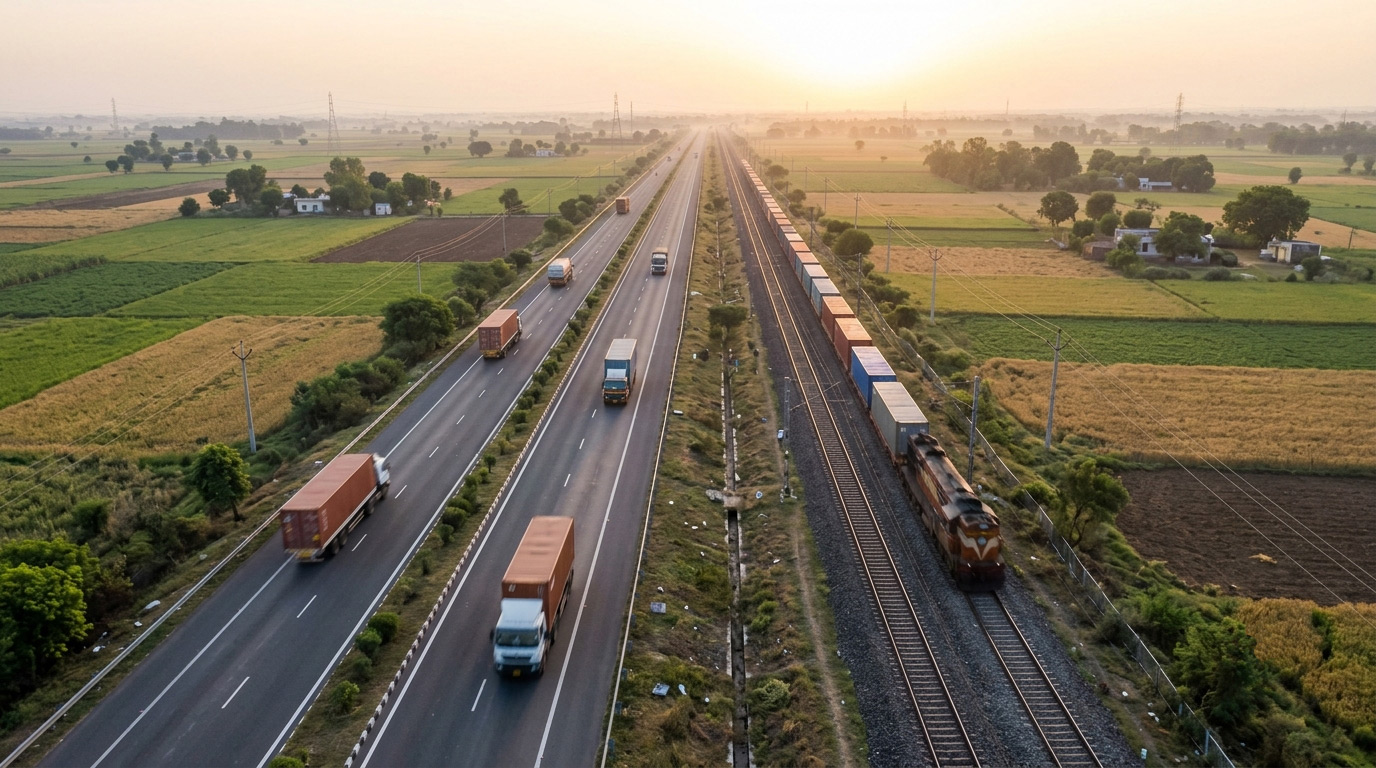
Through the farmland, expressway and rail line run parallel toward the horizon; a corridor is infrastructure with intent: port, rail, power, and policy aligned along a single spine.
Ask where to build in India and the first answer is often a state. The better answer is a corridor. India's industrial corridors are not lines on a map; they are pre-built arguments for your supply chain: port, rail, power, and policy aligned along a single spine, planned and funded before you arrive. To choose a corridor is to inherit its logistics; to ignore the corridors is to build your own, at your own cost. It is the difference between renting a road and owning a route.
What a Corridor Actually Is
A corridor is infrastructure with intent: a dedicated freight artery (rail or expressway) nodes of manufacturing land with pre-approved zoning, substations and water lines sized for industry, and dry ports or port links placed at intervals a truck can respect. Dry ports clear customs inland, so containers move from factory to vessel without ever queueing at a gate. Alongside sits governance: single-window cells, corridor-specific incentives, and a master plan that tells you what your neighbours will be in five years. The corridor converts location risk into location planning.
The Delhi-Mumbai Industrial Corridor, the Chennai–Bengaluru Industrial Corridor, the Amritsar-Kolkata corridor, and their companions each carry a different personality: one favours scale and logistics depth; another favours electronics and engineering ecosystems; another favours resource-linked manufacturing and agro-processing. And each corridor's nodes differ internally: a node beside an existing cluster behaves differently from a greenfield node twenty kilometres away, however glossy its brochure. Climate resilience (flood history, seismic zones, water stress) now enters the corridor reading too, priced by insurers long before it is priced by you. The question is never which corridor is best. It is which corridor is best for your product, your suppliers, and your export lanes.
Across a folded corridor map, a model freight train runs its brass route; the detail decides: a corridor is a supply chain you inherit, not one you build.
Reading a Corridor: Five Questions
We read every corridor against five questions. One: does the freight artery touch your volume (rail rake access for bulk, expressway lanes for time-critical)? Two: is power firm and priced (substation headroom today and augmentation committed tomorrow)? Three: where is the port, in hours not kilometres, including gate turnaround? Four: what is the supplier density within a hundred kilometres (the vendors who will hold your line when a component misses)? Five: what does the master plan promise beside you (complementary industry, or competing land use(? A sixth question completes the set for export-oriented plants: does the node sit within a customs-bonded framework, or within reach of one?
"The question is never which corridor is best. It is which corridor is best for your product, your suppliers, and your export lanes."
The Incentive Layer
Corridors also carry a policy layer: node-specific subsidies, stamp-duty exemptions, and employment-linked incentives that stack with state and national schemes. Read carefully, they reward sequencing: land allotment windows, investment thresholds, and employment commitments each carry clocks. We map these clocks against your capex plan so that eligibility is earned, not chased. In one engagement, aligning an allotment window with the client's board calendar saved a full quarter of eligibility delay.
Across a desk valley of blueprints, a miniature cable-stay bridge holds its span; the right corridor carries your supply chain across every valley between intent and production.
What This Means for Your Enterprise
For the board weighing India, the corridor lens changes the conversation from "which state offers the most" to "which spine delivers the fastest, at the lowest total cost, with the least surprise." Corridors are where India's planning meets your schedule: land with title clarity, utilities with headroom, and logistics with lanes already drawn. Begin with the freight artery and the port clock; the incentives will follow in order. And when two corridors score equally, choose the one whose master-plan neighbours match your suppliers: adjacency is the quietest advantage of all. Because the corridor you choose is the supply chain you inherit, and inheritance, unlike construction, begins on day one.
Indo-Pacific Hub • The Reading Room — Full Briefing
Thematic Briefing • Compliance
Compliance Without Anxiety: Reading India's Regulatory Map
India's regulatory landscape is often feared before it is read. In truth, most approvals follow a published sequence with defined timelines. This is how the map becomes a checklist, and the checklist becomes a calendar.
By The Indo-Pacific Hub Strategy Desk • 4 Min Briefing • Thematic Intelligence
Upon the desk, an open statute book rests beside a brass seal and pen; the regulatory map, read closely, is quieter and far more workable than its reputation.
Ask a board what worries it about India and the answer is rarely the market; it is the maze. Compliance carries a reputation heavier than its reality: stories of endless stamps, uncertain clocks, and midnight files. The truth, read closely, is quieter and far more workable. Most Indian approvals follow a published sequence with defined timelines, digital filings, and deemed-approval clauses. The complexity lies not in the law but in knowing the sequence, the authority, and the order, and in preparing documents that answer questions before they are asked. Reputation travels faster than reform; reform, however, is now ahead of reputation.
The Map Before the Maze
Begin with the shape of the map. India's regulatory architecture is layered: central statutes (environment, factories, labour codes, foreign exchange) state industrial policies and clearances, and municipal permissions such as building plan, fire, and water. Each layer has its own portal, its own clock, and its own officer. Read together they form a sequence, not a tangle: land title enables land-use conversion; conversion enables building-plan sanction; plan sanction enables construction; construction enables the occupancy and operating licences. Municipal trade licences and goods-and-services registrations sit at the end of the chain, ready within days once the operating licences land. Mis-ordering any step is the true source of delay, not the law itself.
Two reforms have changed the texture of compliance. First, single-window portals now route most industrial approvals through one filing, with statutory time limits and, in several states, deemed approval if the clock expires. Second, the labour codes consolidate dozens of statutes into four, simplifying registers, returns, and inspections. Inspection reform completes the picture: risk-based inspection regimes now spare compliant plants the knock of routine visits. The maze is being redrawn as a map, faster than most reputations update.
Upon ribboned documents, a brass seal rests with its stamp face down; the detail decides: an approval is only a document that arrived in the right order.
The Checklist Discipline
We convert the map into a checklist per project: what applies, when it applies, and who signs. Environmental clearance and pollution consent for the process class; factory licence and fire NOC for the building; power and water sanctions for the utilities; labour registrations for the first hire; and sector-specific licences where the product demands them (pharma, food, explosives, electronics). For export-oriented units, bonded-warehouse licensing and incentive registrations join the list, each with its own eligibility clock. Each line carries four entries: the authority, the portal, the statutory clock, and the documents that must precede it. The checklist becomes the project's compliance calendar, and the calendar becomes the board's comfort.
"Compliance becomes a calendar, not a gamble, the moment the sequence is known before the first filing."
The Human Layer
Documents aside, compliance is conducted by people: district officers, inspection officers, portal reviewers. Three practices keep those encounters productive. File completely: an incomplete application resets the clock and the relationship. File early in the week and early in the month, when desks are clearest. And respond to queries in writing, within days, citing the rule relied upon. Keep a compliance log: every filing, every query, every response, timestamped. In our experience, the firms that treat officers as partners in a published process receive the timelines the process promises.
Beside an open notebook, small brass balance scales hold their quiet poise; weighed, sequenced, and documented, the regulatory map keeps its promises.
What This Means for Your Enterprise
For the global enterprise, India's compliance landscape should be priced as planning, not as risk. The sequence is published; the clocks are statutory; the portals leave an audit trail. What varies is preparation: title clarity before filing, drawings that match the process, and documents that answer questions before they are asked. Begin with the checklist before the land is signed; let the calendar run beside the construction programme. And when an officer's query arrives, treat it as the process speaking; answered well, it shortens every query that follows. Because compliance, read correctly, is not the cost of entering India; it is the discipline that makes every subsequent promise to your board keepable.
Indo-Pacific Hub • The Reading Room — Full Briefing
Thematic Briefing • Workforce
The Workforce Dividend: Skill at Scale
India adds one of the world's largest working-age populations each year, yet the dividend is not automatic; it is engineered. This is how availability becomes capability, and capability becomes loyalty.
By The Indo-Pacific Hub Strategy Desk • 4 Min Briefing • Thematic Intelligence
Within the training hall, hands meet tools at ordered benches; the dividend is not automatic, it is engineered.
Every board deck on India opens with the same number: a workforce younger than any other major economy, adding millions of working-age people each year. And every sceptic answers with the same caution: availability is not skill. Both are right, and between them lies the truth this briefing exists to tell. The workforce dividend is not automatic; it is engineered. It accrues to the enterprise that chooses not merely a labour pool but a learning ecosystem, and then invests in the last mile of training itself. It is the difference between a population and a pipeline.
The Shape of the Supply
Begin with the shape of the supply. India's workforce is vast but unevenly distributed: engineering graduates cluster around technical universities in the south and west; operator talent pools sit near industrial belts; and the north adds volume faster than the south adds vocational depth. Within that map, the relevant unit is not the nation but the commuting radius (typically fifty to eighty kilometres around your gate). Language matters too: states differ in tongue, and operator training runs fastest in the local language, a small fact with large consequences for documentation and safety briefings. The question is never "does India have people?" It is "does this district have the people my process needs, at the quality my quality system demands, within a bus ride of my turnstiles?"
Three institutions form the pipeline: Industrial Training Institutes and polytechnics for operators and technicians; engineering colleges and universities for engineers; and a growing layer of private skill academies and sector skill councils that certify to industry-defined standards. For advanced processes, a fourth institution appears: the centre-of-excellence labs that state governments now build with industry partners, training on the same machine brands your line will run. Apprenticeship reform now lets firms embed trainees on the floor with stipend support, converting classrooms into feeders.
Beside gloves and a measuring tape, an apprentice's toolbox rests open upon the bench; the detail decides: skill that stays is skill trained within commuting distance of your gate.
Engineering the Dividend
The dividend is engineered through four moves. One: map the pipeline before the site is signed: institute placements, pass rates, and the employers who already draw from them. Two: adopt an institute rather than advertise to it: a donated lab, a guest-faculty rotation, a curriculum advisory seat; each rupee spent there returns as day-one readiness. Three: build the internal academy early: a two-week induction that teaches your standards, your safety grammar, and your documentation discipline before the first shift. Four: design retention deliberately: wage bands benchmarked to the district, not the metro; shift patterns that respect festival and family; and a visible promotion ladder from operator to supervisor to manager.
"The dividend is not automatic; it is engineered. Skill that stays is skill trained, welcomed, and promoted within reach of home."
The Retention Arithmetic
Retention is where the dividend compounds or evaporates. Operator turnover in Indian manufacturing varies from single digits in plants with strong training and housing culture to forty percent or more in plants that treat labour as a commodity. The cost of each departure is not merely the replacement hire; it is the re-training weeks, the quality risk in the learning curve, and the message sent to those who remain. One European plant cut first-year turnover by half simply by moving from annual to quarterly skill-certification pay steps: progress made visible, and paid. Housing for migrant hires, transport for village hires, and canteens that respect regional taste are not welfare; they are yield.
Upon rolled certificates tied in ribbon, a graduation cap rests in quiet readiness; the pipeline that feeds your gate begins in classrooms you may never visit, and can easily befriend.
What This Means for Your Enterprise
For the global enterprise, India's workforce should be read as an ecosystem to join, not a resource to draw. Choose the district whose institutes match your process; adopt them early; build the academy before the line; and benchmark wages to the district's respect, not its minimum. Do this and the dividend arrives as promised: scale with skill, loyalty with scale. And when your expatriate manager teaches a class at the adopted institute, count it as recruitment: the best hires begin as students. Because the workforce question is never answered at the gate; it is answered in the classroom fifty kilometres away, and in the promotion letter signed three years from now.
Indo-Pacific Hub • The Reading Room — Full Briefing
Thematic Briefing • Infrastructure
Infrastructure That Carries: Ports, Power, and the Last Mile
A factory is only as strong as the road out of its gate. India's infrastructure story is now one of capacity added at speed: ports decongested, corridors electrified, power firmed by renewables. This is how to test the last mile before you sign.
By The Indo-Pacific Hub Strategy Desk • 4 Min Briefing • Thematic Intelligence
Over the container terminal, gantry cranes wake above the stacked rows; capacity added at speed: ports decongested, corridors electrified, power firmed by renewables.
Every manufacturing promise is kept, or broken, on infrastructure. A line can be commissioned on schedule and still miss shipments because a substation tripped, a berth queued, or an approach road flooded in July. India's infrastructure story was once told in shortages; today it is told in capacity added at speed: ports decongested, freight corridors electrified, highways stitched coast to coast, and power firmed by renewables. It is the quiet arithmetic behind every incentive: infrastructure decides the delivered cost. For the global enterprise, the question is no longer whether India builds, but whether the specific kilometres and kilowatts your plant depends upon are built, committed, and priced.
The Four Arteries
Read infrastructure as four arteries. Power: not merely connection sanction but firm capacity (substation headroom today, augmentation committed in writing tomorrow, and a renewable open-access route for customers who audit carbon). Water and effluent: process volume assured, treatment capacity proven, and in water-stressed districts a recycling plan that satisfies both regulator and reputation. Logistics: port turnaround in hours, rail siding or dry-port access in days, and highway lanes that respect trucking hours. And digital: fibre redundancy and data-localisation readiness for plants that run on telemetry. Cold-chain and hazardous-cargo capability join the list where the process demands them: specialised arteries with their own approvals.
The national picture supports optimism: dedicated freight corridors shifting freight from road to rail, port automation cutting berth waits, logistics parks with grade-A warehousing, and a transmission grid that now moves surplus solar across states. And the pipeline ahead (multimodal parks, bunker-ready ports, and green-hydrogen hubs) suggests the curve continues upward. Optimism, however, must be localised: the artery that matters is the one that touches your gate.
Above stacked miniature containers, a model port crane holds its poised hook; the detail decides: a factory is only as strong as the road out of its gate.
Testing the Last Mile
We test the last mile with evidence, not brochures. Power: load-flow records and trip history from the feeding substation, plus the utility's augmentation calendar. Water: seasonal aquifer or supply data, and the effluent operator's compliance record. Roads: a monsoon drive of the approach route (because July reveals what April conceals) and a night drive for lighting and security. Port: actual gate-to-berth timings for your cargo class, not published averages. Rail: siding availability and rake allotment history. Neighbours complete the picture: adjacent plants' outage and flood memories are the honest archive no brochure keeps. Each test returns a number; the numbers become the board's infrastructure annex.
"A factory is only as strong as the road out of its gate. Test the last mile before you sign the first line."
The Sequencing Note
Infrastructure also sequences the build. Utility sanctions should precede foundation work; substation augmentation should track equipment delivery; effluent connections should commission with the plant, not after it. Where augmentation lies on a public calendar, we place it on the project calendar, with milestones, owners, and fallbacks: captive generation for power bridges, buffer storage for water bridges, and alternate routing for monsoon weeks. One client's monsoon fallback (a pre-agreed alternate route and a week of buffer stock) saved its first export window entirely.
Across a desk valley of blueprints, a miniature highway flyover arcs in clean concrete; the arteries that carry your goods are planned, tested, and sequenced before your first shipment.
What This Means for Your Enterprise
For the global enterprise, India's infrastructure should be diligenced like a supplier: with records, references, and redundancy plans. The national trend is genuinely favourable (capacity is arriving faster than reputations update), but the decision lives at the node: substation, siding, berth, and approach road. Test those four and the infrastructure risk becomes an infrastructure plan. And where a node falls short, price the bridge honestly: captive power, buffer storage, and alternate routing cost less than a missed launch window. Because the last mile is never last in importance: it is the first promise your plant makes to every customer it will ever serve.
Indo-Pacific Hub • The Reading Room — Full Briefing
Thematic Briefing • Sustainability
Green by Design: Sustainability as Competitive Edge
In India, sustainability is no longer a compliance chapter; it is a cost advantage. One of the world's largest renewable programmes has made green power procureable at scale; and export markets now reward it. This is how the ESG report writes itself.
By The Indo-Pacific Hub Strategy Desk • 4 Min Briefing • Thematic Intelligence
Across the industrial park, solar arrays stand ready for the grid; the mandate: a green-powered production base serving export markets that audit carbon as strictly as yield.
When an export customer asks for a product's carbon ledger, sustainability stops being a chapter in an annual report and becomes a line in a purchase order. India understood this early. One of the world's largest renewable-energy programmes now runs alongside its manufacturing invitation: solar parks the size of districts, wind fleets along the coasts, and a transmission grid learning to move green power across states. For the global manufacturer, this changes the arithmetic: in India, green power is not a premium; at scale, it is increasingly the cheaper electron.
The Green Grid
Begin with the supply. India's installed renewable capacity ranks among the world's largest, and its pipeline is larger still: gigawatt-scale solar parks in Rajasthan and Gujarat, offshore wind surveys along the coasts, and round-the-clock renewable contracts that pair solar with storage to firm the curve. Green open-access rules let industrial buyers procure directly from renewable plants across state lines, and power exchanges trade green certificates for those who need documentation rather than wires. For a plant, the practical menu is rich: captive solar on the roof, open-access solar from a park, round-the-clock renewable contracts, or certificates to close the gap, each with its own price and its own paperwork.
Grid stability completes the picture. Renewable-rich states now invest in storage and transmission to keep voltage firm; and where processes demand absolute continuity, hybrid designs (renewables plus battery plus a conventional bridge) deliver both carbon and certainty. The question at site selection is therefore not "is green power available?" but "which green menu fits my load curve, at what tariff, with what documentation?"
Beside a sprouting plant, a miniature solar panel stands upon the desk; the detail decides: green power is procured in contracts and certificates long before it is celebrated in reports.
The Export Equation
Now the demand side, where sustainability becomes market access. European carbon-border mechanisms price the embedded carbon of imports; global buyers set supplier carbon targets; and consumer brands audit factories as strictly as they audit balance sheets. An Indian plant powered by renewables answers each of these with evidence rather than intention: power-contract records, green-certificate serials, and metered consumption. We have seen export negotiations turn on precisely this: two suppliers, similar price and quality, and the one holding a renewable power contract won the order. And the incentive layer follows: several state policies subsidise renewable captive capacity, while green-hydrogen hubs now court process industries that need molecules, not merely electrons.
"In India, green power is not a premium; at scale, it is the cheaper electron, and the quieter passport to export markets."
Siting for Sustainability
Sustainability also sits. Solar-park proximity shortens the green route; states with renewable surplus price it better; and green-hydrogen corridors gather ammonia, refining, and heavy industry beside production hubs. Water joins the reading too: renewable-rich districts are often water-stressed, so the sustainable site balances sun against aquifer, a trade we weigh explicitly in every corridor matrix. Effluent, waste, and circularity complete the frame: zero-liquid-discharge norms, extended producer responsibility, and industrial symbiosis where one plant's waste becomes another's feedstock.
Beside a small globe, a brass leaf ornament holds its place upon the blueprint; the site that balances sun against aquifer writes its ESG report with a meter, not a manifesto.
What This Means for Your Enterprise
For the global enterprise, India's sustainability story should be read as competitive edge, not compliance cost. Site where solar parks meet grid stability; contract green power before the customer asks, not after; and let metered evidence write the ESG report. Do this and sustainability stops being a department and becomes a discount: cheaper electrons, smoother customs conversations, and export customers who renew rather than renegotiate. Because the factory that runs on sunshine answers the hardest question in modern trade before it is asked, and answers it with a meter, not a manifesto.
Indo-Pacific Hub • The Reading Room — Full Briefing
Achievement • Space & Technology
From Launchpad to Lunar Soil: What India's Space Story Tells the World
When Chandrayaan-3 settled onto the lunar south pole, it delivered more than science; it delivered evidence of an industrial ecosystem that plans patiently, spends wisely, and executes precisely. This is what that means for the global manufacturer.
By The Indo-Pacific Hub Editorial • 4 Min Briefing • Achievement
Above the launchpad, a heavy-lift rocket climbs with a nation's intent; its ascent signalled an ecosystem ready for global partnership.
When Chandrayaan-3's lander settled onto the lunar south pole in August 2023, India became the first nation to reach that region and the fourth to soft-land on the Moon. The world saw a triumph of science. The global enterprise should see something further: a demonstration of how Indian engineering plans, budgets, and delivers under unforgiving constraints, and a preview of the industrial ecosystem now opening to international partners.
The Discipline of Frugal Engineering
The mission was achieved at a reported cost of roughly seventy-five million dollars, a fraction of comparable lunar programmes. That frugality was not austerity; it was design philosophy. Every gram of payload, every line of code, every ground test was weighed against purpose. Indigenous components, iterative qualification, and digital simulation replaced expensive redundancy with engineered confidence; digital twins validated what hardware once proved by trial, shortening test cycles without shortening certainty. The result is a cost structure that global boards find startling until they audit it.
Equally telling was the patience. Chandrayaan-3 followed its predecessor's partial success by four years, time spent not in redesigning ambition but in correcting specifics. Failure was analysed without blame, correction sequenced without haste, and execution rehearsed until certainty. It is the same patience that governs a well-sequenced factory commissioning. For boards accustomed to viewing India through the lens of speed alone, this is the quieter lesson: Indian programmes optimise for certainty, and certainty is what protects capital.
Inside a satellite cleanroom: gloved hands integrate a payload panel wrapped in gold and silver thermal foil; the detail decides, for iterative qualification replaced costly redundancy with engineered confidence.
An Ecosystem, Not an Event
Behind the lander stood a supply chain: precision manufacturers, materials laboratories, semiconductor designers, software houses, and a workforce trained to global standards. ISRO's long practice of transferring proven space technology to industry has seeded suppliers across defence, electronics, and healthcare. The lunar touchdown was therefore not an event but a certificate: an audit passed by an entire industrial ecosystem. And quality systems certified for space do not expire at the factory gate; they raise the floor of everything built beside them. None of this capacity is confined to space; it is the same machining, metrology, and documentation culture that automotive and medical customers audit each year.
"A nation that can land on the Moon's south pole within a structured budget can be trusted with your most demanding production line."
The Workforce Behind the Mission
The mission also revealed depth of talent: thousands of engineers, many under forty, working across centres and industry partners. It is also a workforce shaped by mission culture: documentation disciplined, reviews rigorous, and deadlines honoured because a launch window cannot be renegotiated. The same pipeline (technical institutes, research laboratories, apprenticeship programmes) feeds civilian manufacturing. For an investor weighing an engineering-heavy operation, the space programme is a living catalogue of the skill available: patient, precise, and comfortable with accountability.
On the inspection bench, a precision-machined satellite component awaits its certificate; scale follows certainty: the precision that served the lander now serves global supply chains.
From Mission to Market
The transition is already visible. Launch-vehicle manufacturers source turbopump components and composites from Indian suppliers; satellite operators qualify Indian assembly lines for export models; ground-station networks rise on Indian software. State aerospace parks in Karnataka, Tamil Nadu, and Andhra Pradesh now offer ready infrastructure for such partnerships, co-locating suppliers beside test facilities. Each contract carries the same lineage: processes refined by missions that could not afford failure. When your quality auditors examine these suppliers, they examine the descendants of a discipline proven beyond the atmosphere.
What This Means for Your Enterprise
India's space story answers the question every board asks of a new geography: can complex programmes be trusted here? The evidence says yes: patiently planned, precisely executed, and priced with discipline. For the global manufacturer, the opportunity is not to build rockets but to join the standard they set: to source, assemble, and engineer beside teams for whom precision at scale is a national habit. Begin with a component, a sub-assembly, a test campaign; let the ecosystem prove itself at small scale, as it has proven itself at cosmic scale. That is the quiet invitation held within the lunar soil, and it is open now.



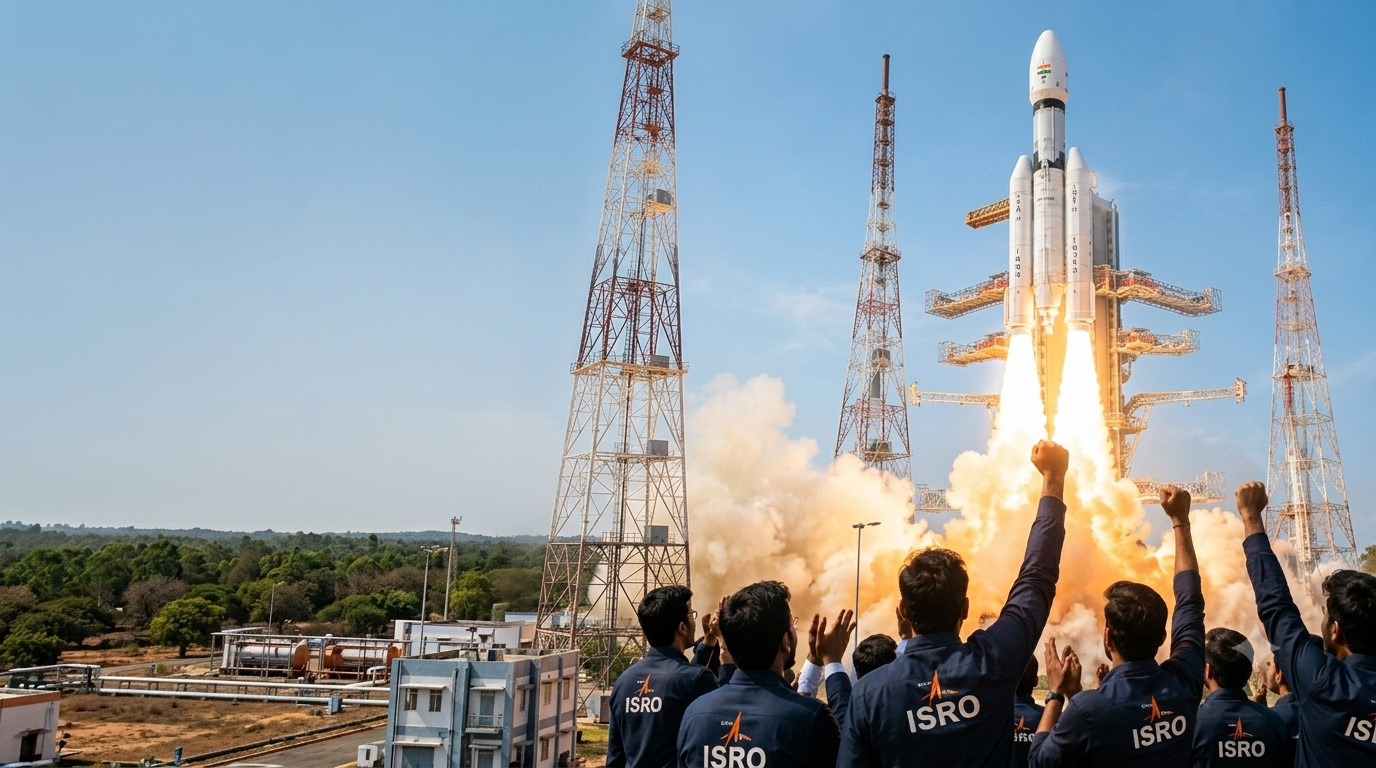

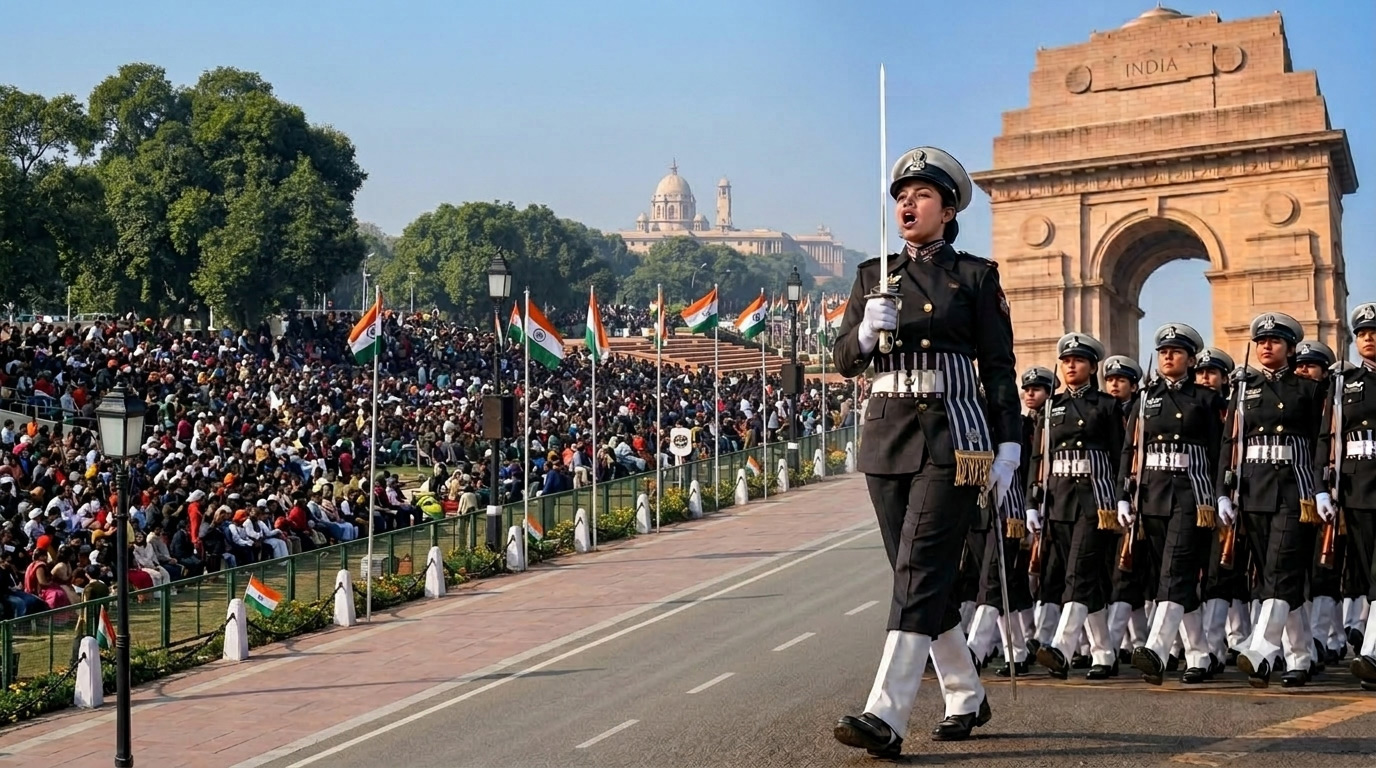

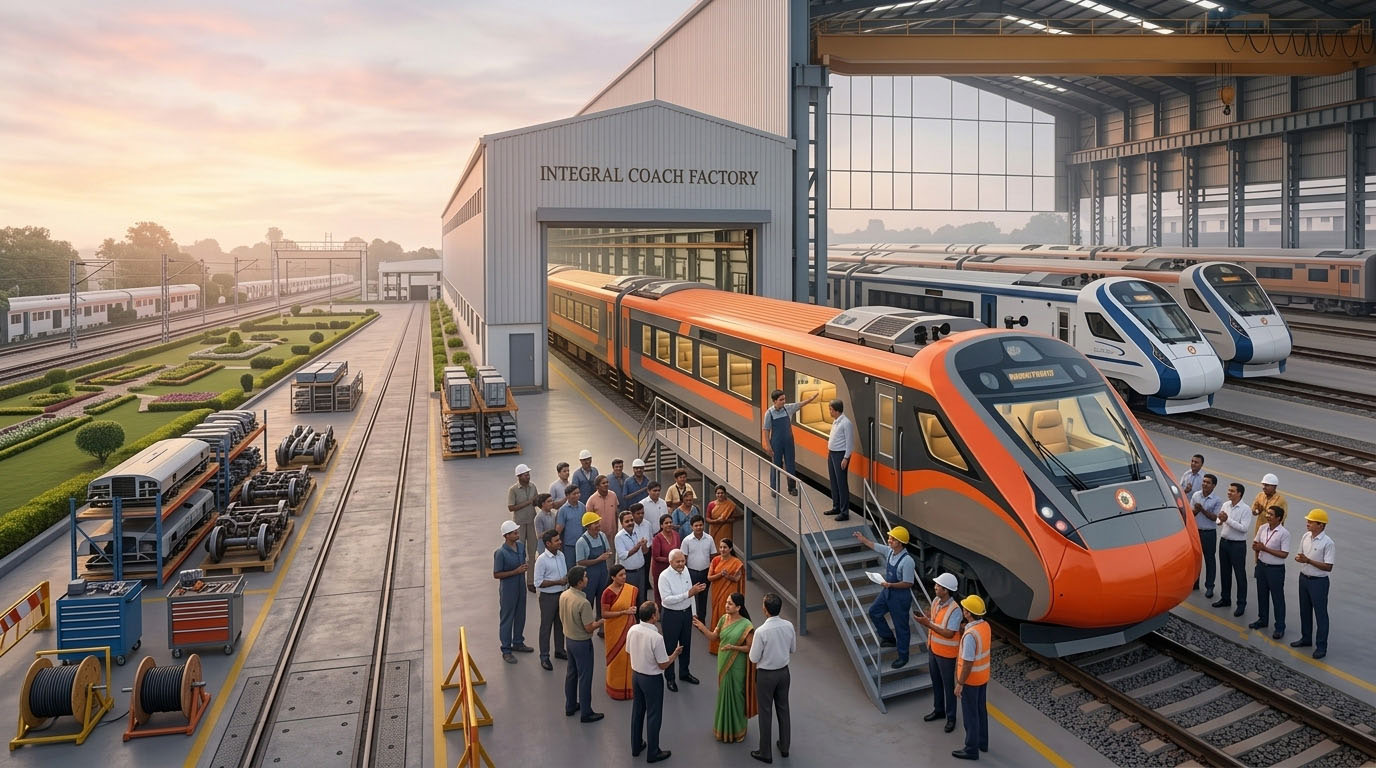

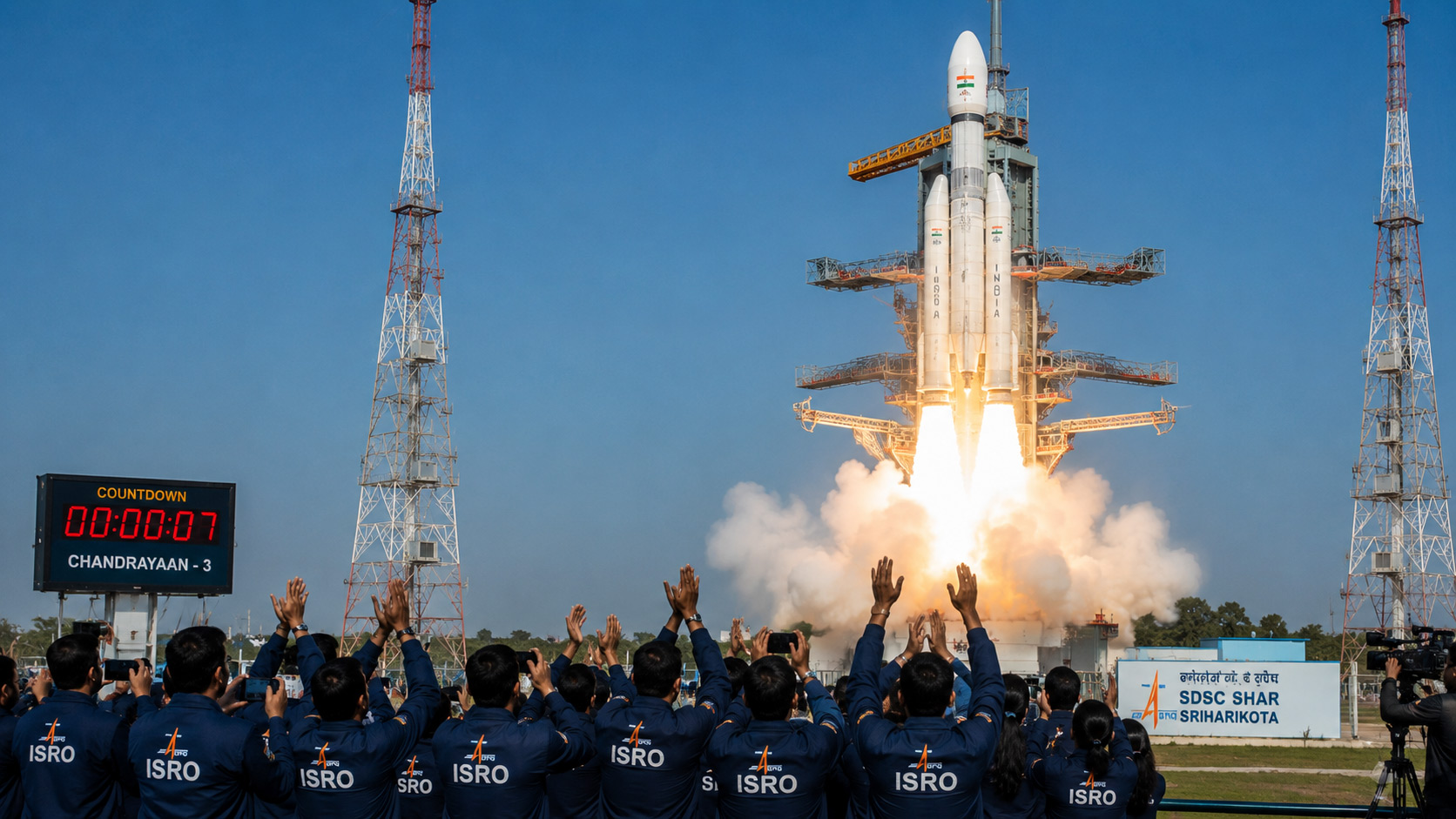



 Space & Technology